
What Should You Consider Before Upgrading Your Harley Sportster 1200 Exhaust?

Your Sportster 1200 sounds like a sewing machine at idle, and every time you twist the throttle you wonder if the factory pipes are holding the whole bike back.
That flat, muffled note is exactly what federal regulators want from a stock exhaust. It is also exactly what sends most riders shopping for a harley 1200 sportster exhaust upgrade within the first six months of ownership.
The mistake most riders make is buying sound clips alone. They discover the pipe does not clear their mid controls, or it throws a fault code two weeks later.
It happens the same way almost every time. A rider watches a video of a 2 into 1 system on someone else's Sportster and orders the identical part number. Installation day arrives and their forward controls sit exactly where the head pipe needs to route.
Here is what actually decides whether a harley 1200 sportster exhaust upgrade works out, or turns into a return label:
Whether the system bolts to your specific frame year and control setup
How the change affects your O2 sensor and fuel mapping
What material and construction the pipe is actually built from
Whether the sound level you want is even legal where you ride
Is a Harley 1200 Sportster Exhaust Upgrade Right for You?
A harley 1200 sportster exhaust swap is worth it once you confirm three things: the system is built for your exact frame year and control position, it keeps or properly deletes your O2 sensor without triggering fault codes, and the material is stainless steel or better so it survives more than one riding season. Sound and styling are the easy part. Fitment and emissions compliance are the harder part, and skipping that step is why so many sportster 1200 exhaust pipes end up back in the box they arrived in. Check those three boxes first, then shop for tone.
Why the Stock Sportster 1200 Exhaust Leaves Riders Wanting More
Harley tunes the stock exhaust for pedestrians and pass-by tests, not for character. The factory system routes gas through a catalytic converter and a long, muffled path that trades flow and sound for quiet compliance.
That is not a flaw. It is the design goal, since every Sportster 1200 has to certify against federal noise and emissions standards before it reaches a showroom floor.
A sportster 1200 exhaust upgrade exists because riders want the machine to sound like what it actually is, a big air-cooled V-twin, not an appliance.
There is also a practical side to it beyond tone. Factory head pipes on higher-mileage Sportsters develop pinhole leaks at the collector. By the time a rider notices the tick at idle, replacing the whole system often costs about the same as upgrading it.
Weight is a smaller but real factor too. A stock catalytic converter and its housing add several pounds low on the frame. A lighter aftermarket sportster 1200 exhaust system shaves some of that off, and riders notice it most in tight, low-speed turns.
The budget frames the decision too. Slip-on systems for a Sportster 1200 typically run $200 to $500, while a full system with new head pipes and mufflers typically runs $500 to $1,200 depending on material and brand.
What to Check Before You Buy Sportster 1200 Exhaust Pipes
Run through these four checks in order before you shop for a harley 1200 sportster exhaust by brand name. Fitment and compatibility come first because they determine whether the pipe will even go on your bike. Sound and finish are the reward for getting the first two right.
Plan for about fifteen minutes of research per candidate system before you compare prices. Pull up the manufacturer's fitment chart, note your frame year and control type, and confirm the O2 sensor provision matches your fuel system. That small time investment upfront is what separates a smooth install from a return shipping label.
1. Frame and Control Fitment
Confirm your Sportster's model year and control type before anything goes in the cart. Forward controls, mid controls and rearsets each change where the head pipe has to route, and a system built for one will rub or bind on another.
1986 to 2003 Sportster frames are rigid mounted, while 2004 and later models use a rubber mounted engine with different frame geometry around the motor. A pipe designed for the wrong generation will not sit right no matter how clean the welds are.
Mid controls sit close to the frame and generally give the most clearance for a wide range of pipe shapes. Forward controls push the footpegs ahead of the engine. That is exactly where many 2 into 1 collectors want to route, so double-check that specific measurement before ordering. Rearsets raise the same concern in the opposite direction, since the head pipe has to clear a higher, further-back peg mount.
A tape measure and five minutes with the manufacturer's fitment diagram catches most of these conflicts before checkout. Compare the collector-to-peg distance on the diagram against your own bike rather than assuming your control type matches the photo in the listing.
If your Sportster has been lowered or fitted with aftermarket shocks, mention it when you check fitment. A pipe that clears stock ride height can scrape a lowered rear end in a hard corner. That is a cheap detail to confirm and an expensive one to discover on a canyon road.
2. O2 Sensor and Fuel Injection Compatibility
Every EFI Sportster 1200 relies on its oxygen sensor to keep the fuel mixture correct. A full harley sportster 1200 exhaust system needs a properly sized O2 bung in the right location, and a slip-on needs to leave the stock sensor position untouched.
Skip this check and the bike either throws a lean fault code or runs rich enough to foul plugs within a few hundred miles. Carbureted pre-2007 Sportsters do not have this concern, so confirm which fuel system you actually have.
O2 bung thread size is not universal across model years either. Some riders use a threaded adapter or a dedicated O2 eliminator plug when a system does not include the right bung. That is a workaround, though, not a substitute for buying a system engineered for your specific year.
If you are unsure which fuel system your Sportster 1200 uses, check the throttle body. A cable running to a round throttle body housing with no visible carburetor float bowl underneath means EFI. The O2 sensor check applies to you directly in that case.
3. Construction and Coating
Material choice decides how the exhaust looks and lasts three seasons from now. stainless steel resists corrosion far better than plain steel, and most quality builders use gas tungsten arc welding because thin-wall tubing needs that level of heat control to avoid warping.
Beyond finish, check wall thickness and weld quality directly if photos allow it. A thicker gauge tube with a clean, consistent bead holds up to years of heat cycling far better than a thin tube with a rough weld, even if both are labeled stainless steel.
Weight varies by finish too. Chrome plated steel tends to run heavier than an equivalent stainless system, since the base tubing is thicker to support the plating process without warping.
4. Sound Character and Baffle Design
A sportster 1200 performance exhaust changes more than volume. Pipe layout changes torque delivery, and baffle design changes where in the rev range the note actually lives.
Removable baffles give you a way to dial sound up for a weekend ride and back down for a daily commute. That flexibility is worth considering if you share a garage wall with neighbors or ride through a lot of residential streets. Fixed baffle systems are usually quieter at a given price point but remove that flexibility entirely.
Pay attention to drone as well as loudness. A pipe that sounds great parked in the driveway can turn into a fatiguing resonance at highway cruising RPM. That quality is much harder to judge from a video than from actually riding one.
Recommended Sportster 1200 Exhaust Systems from Kinetic Motorcycles
Every option below is handmade in Houston from 304 stainless steel, ceramic-coated inside, with O2 bungs sized for EFI Sportsters. Confirm your control type at checkout, then pick the layout and sound you want.
1. XL3 Modular Exhaust - $950.00
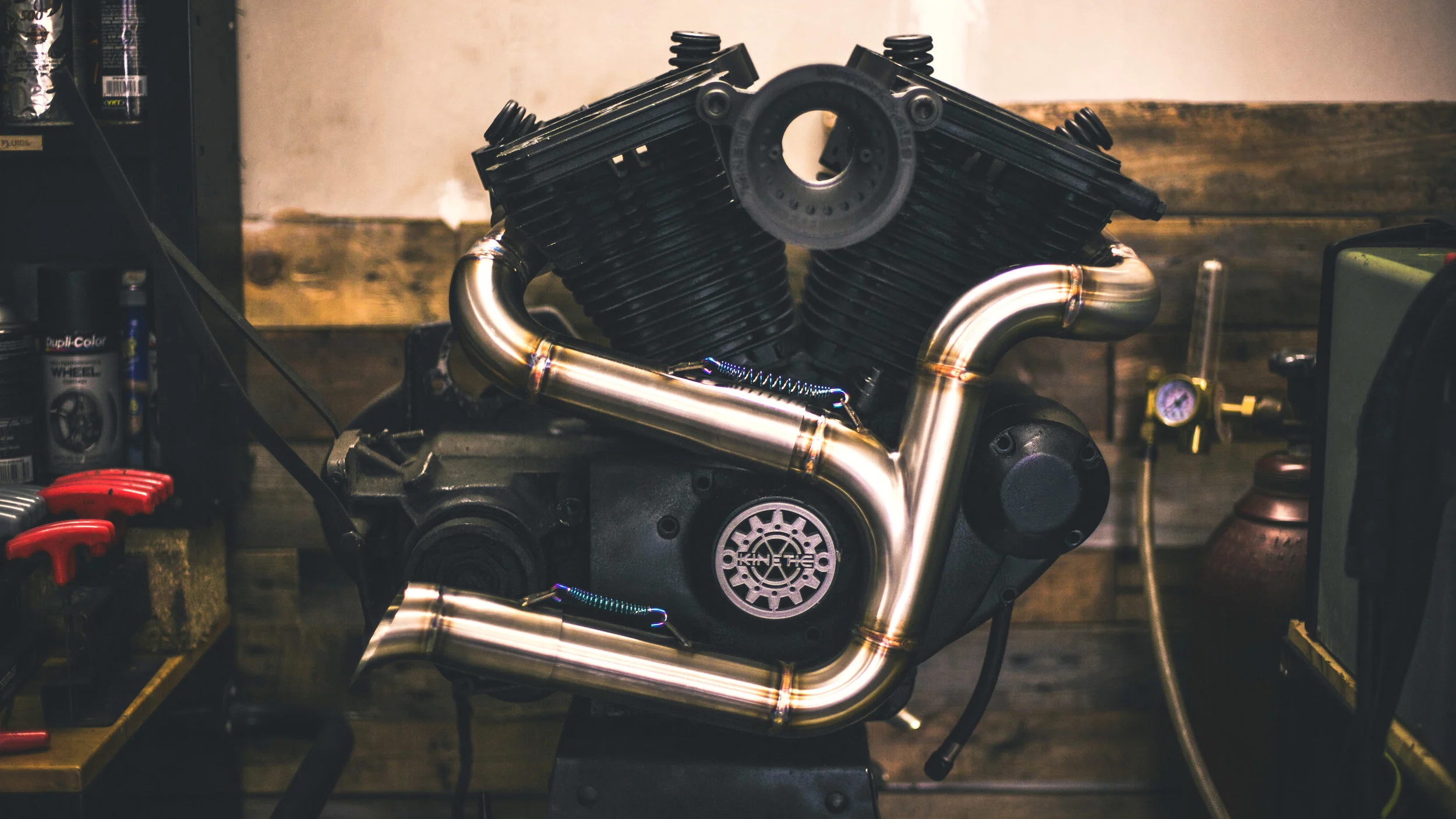
A three-piece modular 2-into-1 covering 1986 to 2022-plus Sportsters. Swap tips and sections without replacing the whole system, which makes it the most versatile harley 1200 sportster exhaust for riders who like to change their look.
2. Deluxe Series 1 (DS1) - $1,000.00
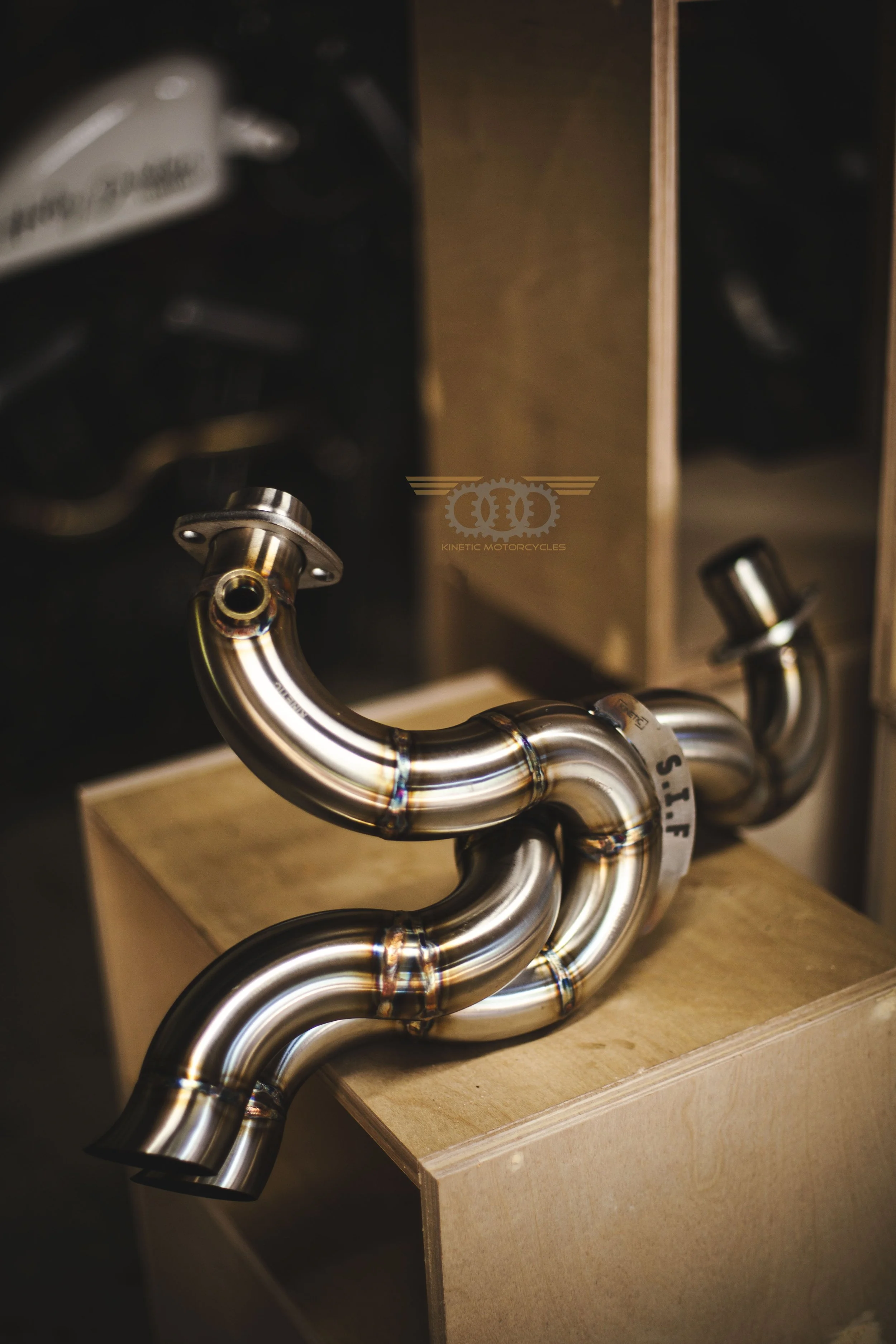
Designed by founder Mike Le with equal-length tubing and no straight sections for optimal flow. The choice when tuned header design matters more than budget, with an integrated flange kit for an easier install.
3. YS8 2-1 Exhaust - $1,500.00
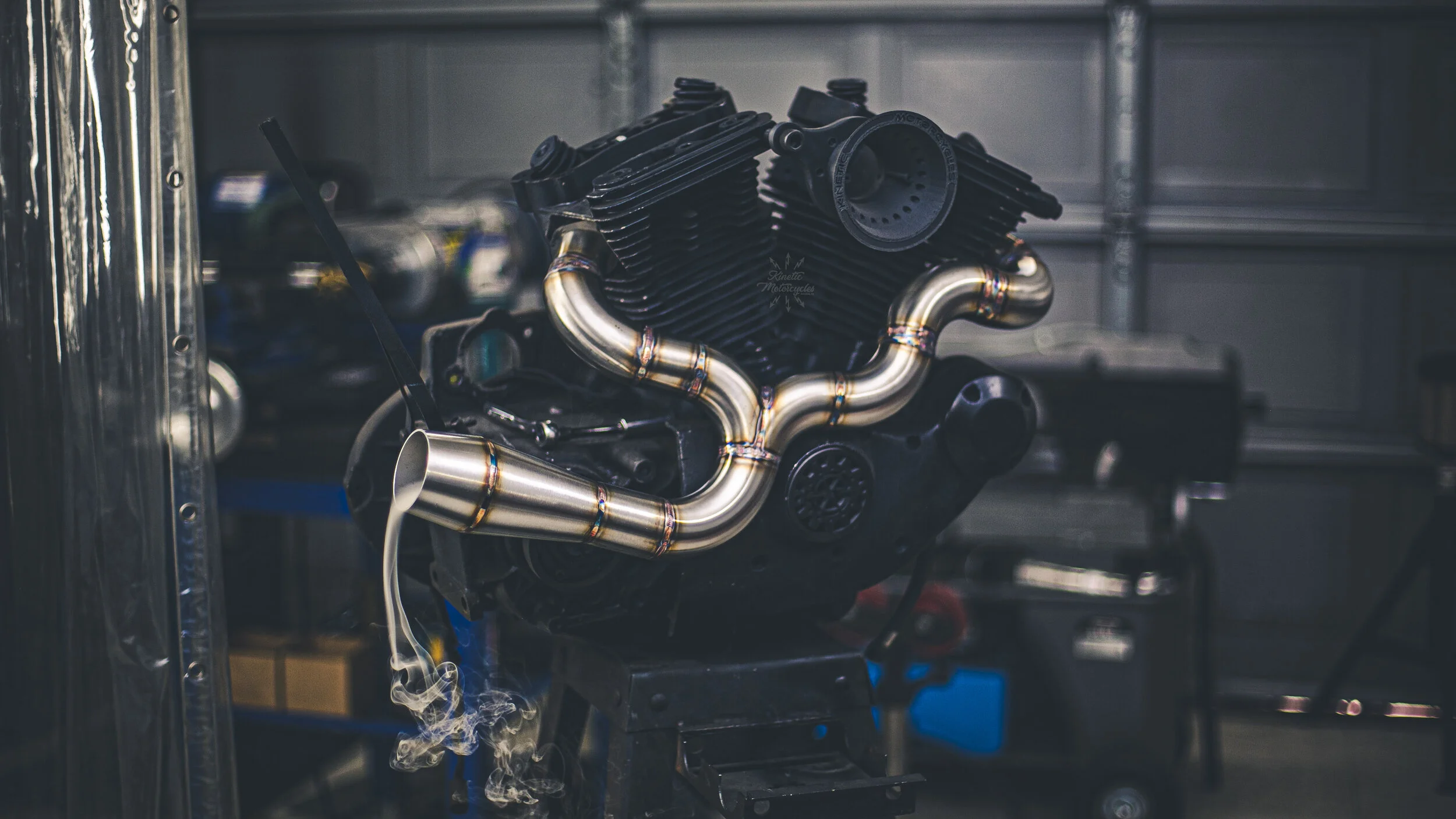
A Y-collector 2-into-1 with a resonated reverse-cone muffler weighing just eight pounds. The flagship sportster 1200 performance exhaust for riders chasing scavenging and weight savings in one package.
4. The Sidewinder 2-2 Exhaust - $750.00
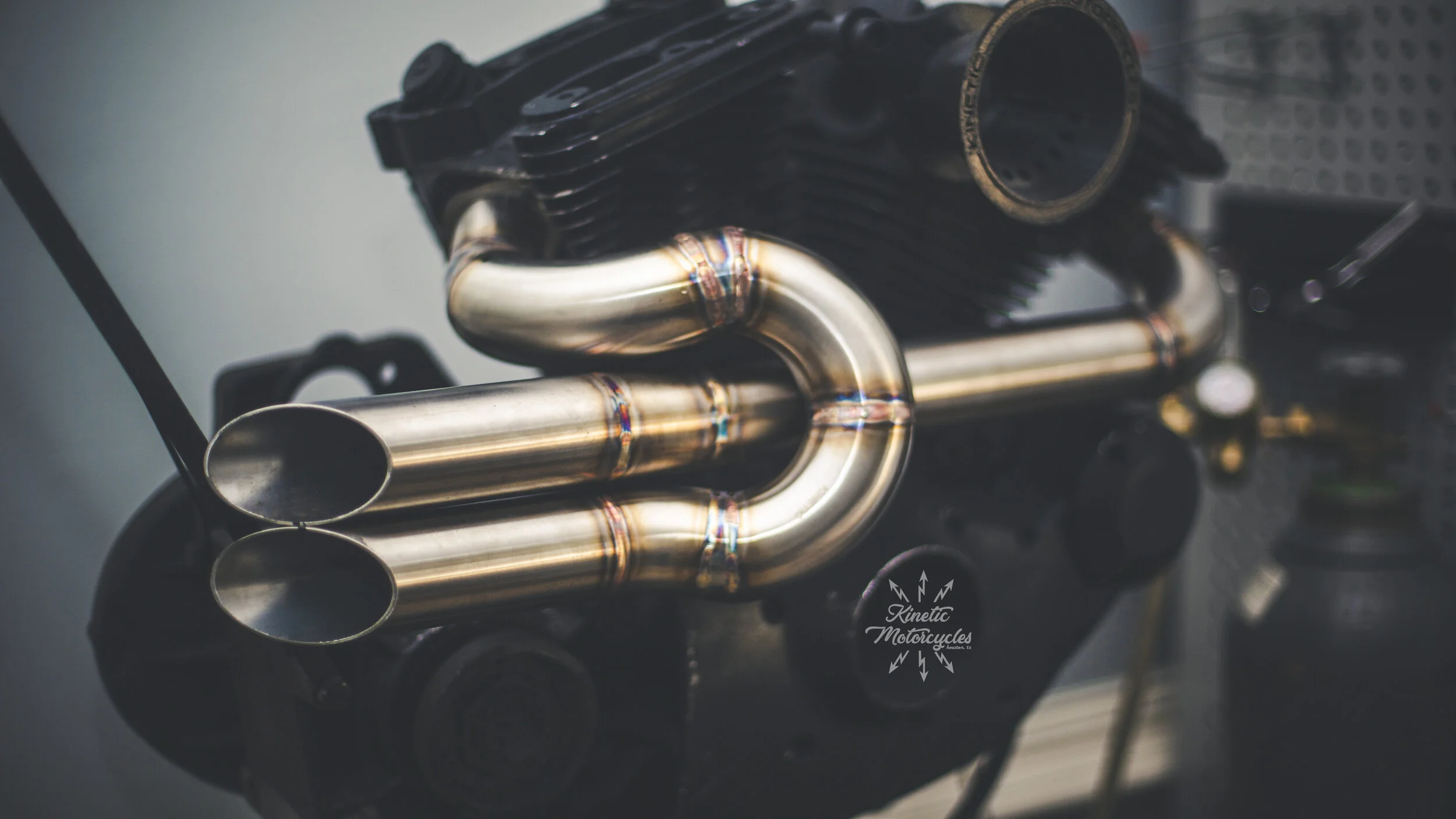
A staggered 2-into-2 with 45-degree exits and an integrated flange kit, fitting mid, forward, and rearset controls. Pick this if you want the traditional twin-pipe look rather than a single collector.
What an Exhaust Upgrade Will Not Fix
An exhaust alone will not deliver a meaningful horsepower gain unless it is paired with a matching intake and a fuel or ignition remap. Pipes flow gas out. They do not put more air and fuel in.
It will also not quiet a worn cam chain tensioner, a loose heat shield, or a failing wheel bearing. If your bike already ticks or rattles, a louder exhaust just makes those sounds harder to isolate, not easier.
A louder pipe will not improve fuel economy either. In many cases a full system without a matching tune slightly worsens it, since the engine control module has to work harder to hold the target air-fuel ratio it was calibrated around.
It will not raise your Sportster's resale value in a predictable way. Some buyers pay a premium for a known-quality aftermarket system. Just as many buyers specifically want a stock exhaust so they can pass a stricter state inspection without hassle.
Legal Checks Before You Buy
Federal rules require every replacement exhaust sold for street use to carry a permanent compliance label identifying the manufacturer and the noise standard it meets, under 40 CFR Part 205, Subpart E.
Three checks matter before you order:
Confirm the listing shows a street legal compliance label, not a closed course only disclaimer
Check your state's noise inspection rules, since they can be stricter than the federal baseline
Ask whether the system is sold or excluded for use in California specifically
Some states run periodic roadside sound checks at events and rallies, using a stationary decibel measurement rather than a lab test. A system that easily passed the manufacturer's certification can still draw a citation locally if the state applies a different measurement standard. Treat the compliance label as a floor, not a guarantee against every local rule.
Final Thoughts
Fitment decides whether a harley 1200 sportster exhaust upgrade succeeds, not the sound clip that sold you on it. Confirm frame year, control clearance and O2 compatibility before you compare tone.
That verdict flips only if you are building a closed course or show bike that never sees a public road, where legal compliance stops being a factor and sound alone can drive the decision.
For every other rider, work through the checklist in order. Fitment, then compatibility, then material, then sound. Getting the first two right is what makes the last two enjoyable instead of stressful.
Match the pipe to your exact bike first, then pick the note you actually want to hear every single time you thumb the starter awake.
Ready to Upgrade? Explore Kinetic Motorcycles
Kinetic Motorcycles designs and builds every Sportster exhaust in-house in Houston, Texas, with O2 bungs sized for the model years they are sold for rather than a generic universal fit.
Every system ships with the compliance documentation and hardware needed for a clean install, and the team can answer fitment questions by control type before you order rather than after a return.
Browse Kinetic's Harley Davidson Sportster exhaust lineup to compare every 2 into 1 and 2 into 2 layout side by side, filter by your control type, and request a fitment check on your exact model year before you order.
Frequently Asked Questions
-
Only as part of a package. A sportster 1200 exhaust upgrade frees airflow, but real horsepower needs a matching air cleaner and a fuel remap. Installed alone, expect a deeper note and crisper throttle rather than big dyno gains.
-
It depends on the product, not the brand. A legal harley sportster 1200 exhaust system carries a permanent EPA compliance label. Closed-course-only systems are not street legal, and state noise limits can be stricter, so confirm both before buying.
-
A slip-on keeping the stock head pipes usually needs no tune. A full sportster 1200 exhaust system that removes the catalytic converter can run lean, so EFI models benefit from a remap and carbureted models need rejetting.
-
A slip-on replaces only the mufflers on your stock head pipes, making it cheaper and reversible. A full sportster 1200 exhaust system replaces everything from the head pipe back, changing sound and weight more but usually requiring a tune.
-
It can if the oxygen sensor is not addressed. A full harley sportster 1200 exhaust system engineered for your model year places the O2 bung correctly, which usually avoids a fault code. Universal drag pipes are the common culprit.
-
The best exhaust for Sportster 1200 riders on a budget is usually a stainless steel slip-on rather than a full system. It delivers a deeper note affordably, and stainless outlasts chrome, so confirm fitment and compliance before comparing prices.
-
Most riders can fit a slip-on in an afternoon with basic tools. Full sportster 1200 exhaust pipes take longer, since you transfer the O2 sensor and torque new flange nuts evenly. Read the instructions first, or use a shop.
-
A stainless steel sportster 1200 performance exhaust with quality welds should last well beyond ten years, even through wet winters. Ceramic coating adds protection, while chrome-plated steel pits sooner. Check flange gaskets and mounting hardware annually regardless of material.