Dual Pipes or 2-Into-1? Which Exhaust Setup Makes More Sense for Your Harley Dyna?

Two Dyna owners can stand next to the very same bike and argue about exhaust pipes for a solid twenty minutes. They will not disagree about anything else on the build the whole time.
One insists a harley dyna 2 into 1 exhaust is the only serious choice for torque and scavenging. The other will not give up the staggered dual look that has defined the Dyna's silhouette since the platform launched.
Both riders are partly right, and neither is telling the whole story. A dyna 2-1 exhaust and a true dual system trade real advantages for real compromises. The correct choice depends on how you actually ride, not on which side of the garage debate you grew up hearing.
This comparison of 2 into 1 vs dual exhaust dyna setups comes down to five concrete factors, not brand loyalty:
How each layout affects torque delivery through exhaust scavenging
The sound character each produces at idle and at speed
Ground clearance and lean angle in real cornering
Total weight and where it sits on the bike
Whether either swap calls for a fuel or ignition retune
The Quick Answer: 2 Into 1 vs Dual Exhaust on a Dyna
A dyna 2-1 exhaust generally delivers stronger low and midrange torque through better exhaust scavenging, along with a deeper, more even growl and tighter ground clearance for aggressive cornering. Staggered dual pipes deliver the classic Dyna silhouette most riders picture when they think of the platform, with a traditional bark and slightly less scavenging efficiency at low RPM. Choose the 2 into 1 layout if performance and cornering clearance matter more to you than the traditional look. Choose staggered duals if styling and that familiar Dyna profile are the priority.
Why This Debate Never Really Settles on a Dyna
The Harley-Davidson Dyna occupies an identity all its own in Harley's lineup. It is bigger than a Sportster and lighter than a Softail or a Touring model, built around exposed dual rear shocks that riders either love or want to hide.
That in-between identity extends to the exhaust question. Dyna owners inherited staggered duals as the factory default look for decades. That history built deep brand loyalty to the silhouette, regardless of what a dyno graph says about scavenging.
At the same time, the platform has always attracted riders who want a more purpose-built, performance-focused feel. A dyna 2 into 1 exhaust system delivers exactly that impression, along with real measurable benefits over a stock setup.
Neither camp is wrong. They are optimizing for different things, and that is exactly why this comparison needs a factor-by-factor breakdown instead of a single verdict.
It also explains why searches for the best 2 into 1 exhaust for dyna riders rarely settle the styling half of the argument. A dyno chart can prove a torque claim. It cannot tell you whether you will still love the way your bike looks parked outside a diner five years from now.
Weigh both halves of the decision honestly and without letting one side's enthusiasm on a forum thread drown out the other. A rider who values sound and silhouette above a measurable torque gain is not making a wrong choice, just a different one than a rider chasing the last available percentage point of low-end pull.
Dyna 2-1 Exhaust vs Dual Pipes: 5 Factors That Actually Matter
Work through these five factors in order of how much they actually affect your riding experience, starting with the one measurable on a dyno and ending with the one that only matters if you plan to modify the exhaust again later.
1. Torque Delivery and Scavenging
A 2 into 1 collector merges both cylinders' exhaust pulses into a single pipe. This improves scavenging, the effect where a departing exhaust pulse helps pull the next intake charge into the cylinder more efficiently.
A dual exhaust system without a crossover pipe loses some of that scavenging benefit. Each cylinder's pulses travel independently with no interaction to help draw the next charge in. A crossover-equipped dual system recovers some, though usually not all, of that scavenging advantage.
Dyno testing comparing a dyna 2 into 1 exhaust system against a crossover-equipped dual setup on a similar build has shown the 2 into 1 producing more low and midrange torque. The dual system sometimes shows a slight peak horsepower advantage higher in the rev range instead. A dynamometer chart tells this story far more reliably than a seat-of-the-pants impression, since torque differences of a few percent are genuinely hard to feel through the seat alone.
This is the single factor most riders researching a dyna 2-1 exhaust care about the most, and for good reason behind that focus. Most street riding on a Dyna happens well below the RPM where peak horsepower numbers get made, so the low and midrange torque advantage translates directly into how the bike actually feels rolling on the throttle out of a stop sign or merging onto a highway on-ramp.
2. Sound Character
A dyna 2 into 1 exhaust typically produces a deeper, more continuous growl, since the merged pulses blend into one steady tone rather than two distinct pulses.
Staggered duals produce the traditional Harley bark most riders associate with the brand. Each cylinder fires through its own dedicated path all the way to the tip, giving a slightly more separated, percussive character.
Baffle design shifts both profiles more than layout alone does. A wide open dyna 2 1 exhaust pipes setup can out-shout a heavily baffled dual system. Judge specific products by their baffle specification rather than assuming layout alone predicts loudness.
Distance also changes the comparison significantly in practice. Both setups can sound dramatically different heard from directly behind the bike versus heard from the sidewalk as it passes, since exhaust tone reflects off pavement and nearby buildings differently depending on pipe angle and exit height. A sound clip recorded on someone else's phone from an unknown distance tells you less than it seems to.
3. Ground Clearance and Lean Angle
A 2 into 1 system can generally tuck tighter against the frame and transmission. There is only one pipe to route toward the rear rather than two running parallel.
Staggered duals mounted high and to one side are a common complaint on forums for scraping in hard right-hand corners. This shows up particularly on Dynas already lowered from stock ride height.
Clearance varies significantly between specific products regardless of layout. Check the manufacturer's stated lean angle or ground clearance figure rather than assuming every 2 into 1 or every dual system behaves identically.
Riders who spend most of their time on straight highway stretches will notice this factor far less than riders who regularly push through mountain roads or track days. Weigh this factor honestly against your actual riding, not the riding you occasionally do on vacation.
4. Weight
A 2 into 1 system is typically lighter than a comparable dual setup, since it uses less total pipe material and often a single, smaller muffler instead of two.
That weight difference sits low and toward the center of the bike in most mounting configurations. It affects handling feel in tight, technical turns more than it affects any number on a spec sheet.
The difference is not dramatic on its own, typically a few pounds. It stacks with other weight-conscious changes if you are building toward a genuinely lighter overall bike.
5. Tuning Needs After the Swap
Either swap can change backpressure enough to affect the fuel mixture. This applies particularly to EFI Dynas, where the stock ECU is calibrated around the stock exhaust's specific flow characteristics.
Carbureted Dynas typically need a jet change rather than an electronic remap. Fuel injected models benefit from a tuner or a professional dyno tune to correct the air-fuel ratio for the new flow.
Budget for a tune with either dyna 2 1 exhaust pipes option once you are removing the stock system entirely. Do not assume a like-for-like pipe count swap avoids the need.
Recommended Dyna Exhaust Options from Kinetic Motorcycles
Kinetic's Dyna systems are handmade in Houston from 304 stainless steel, ceramic-coated inside. The dedicated lineup is focused, so confirm your model year and control setup, then pick the layout that matches your torque and sound goals.
1. Windsor 2-Into-1 Exhaust for Dyna - $1,150.00
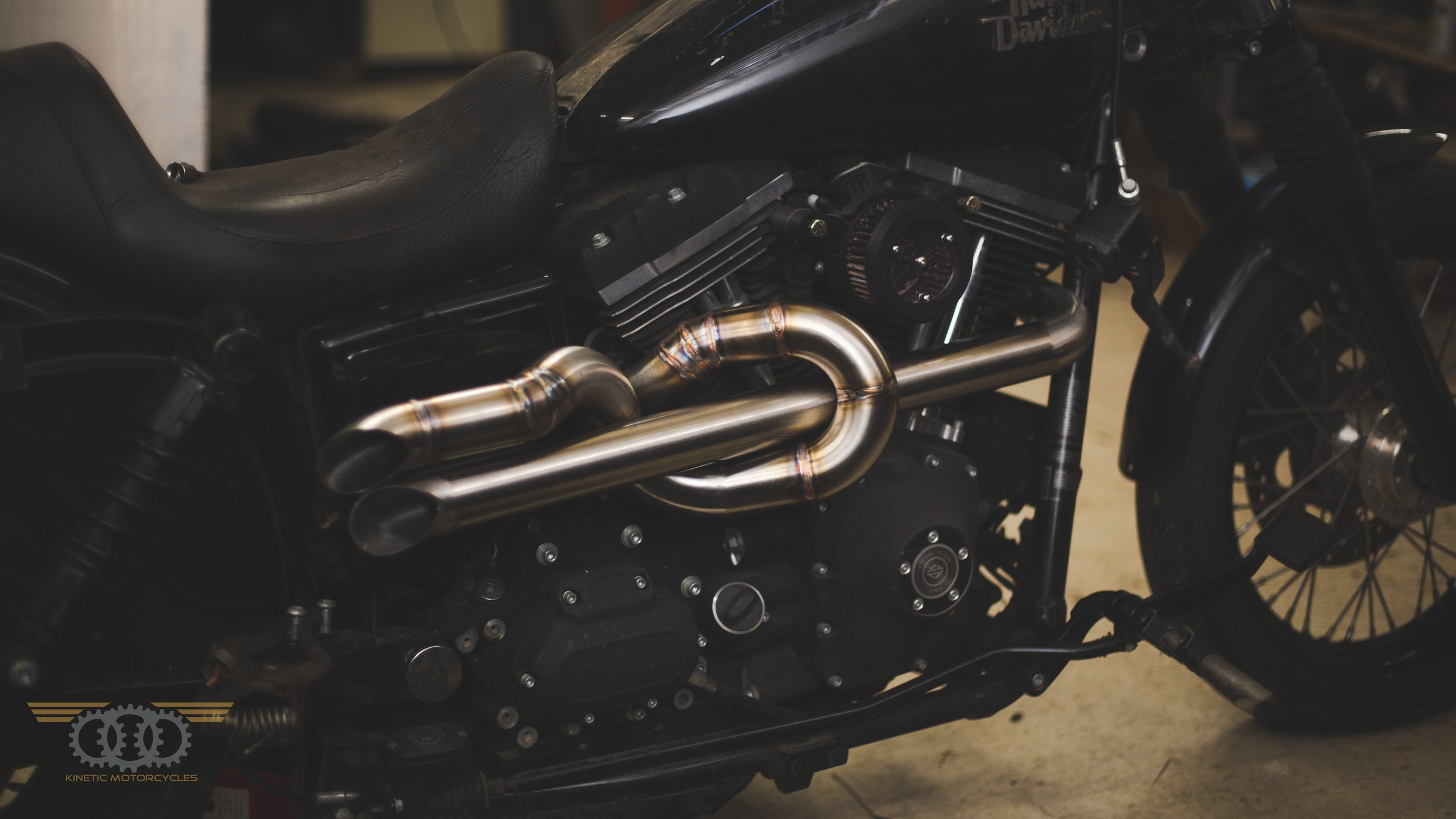
The dedicated 2-into-1 for the Dyna, merging both head pipes into a single collector for stronger low and midrange torque. The choice when roll-on pull matters more than a symmetrical silhouette.
2. 540 Laterals 2-Into-2 Exhaust for Dyna - $800.00
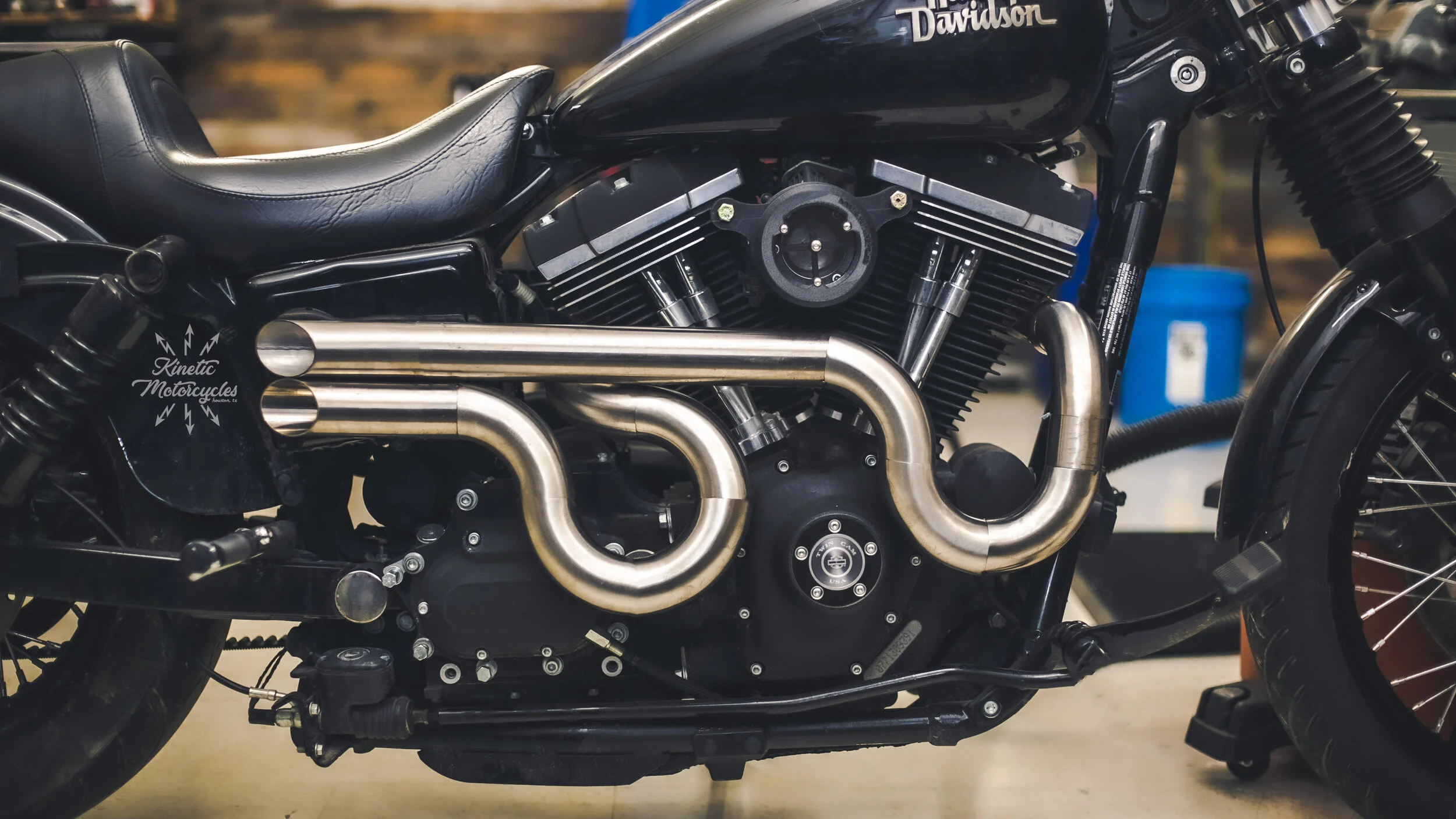
A 2-into-2 that keeps the traditional dual-pipe look while tucking laterally for cornering clearance. The dual-pipe answer for riders who want the classic profile over a single collector.
3. MegaCone Muffler, Universal Slip-On Silencer - $225.00
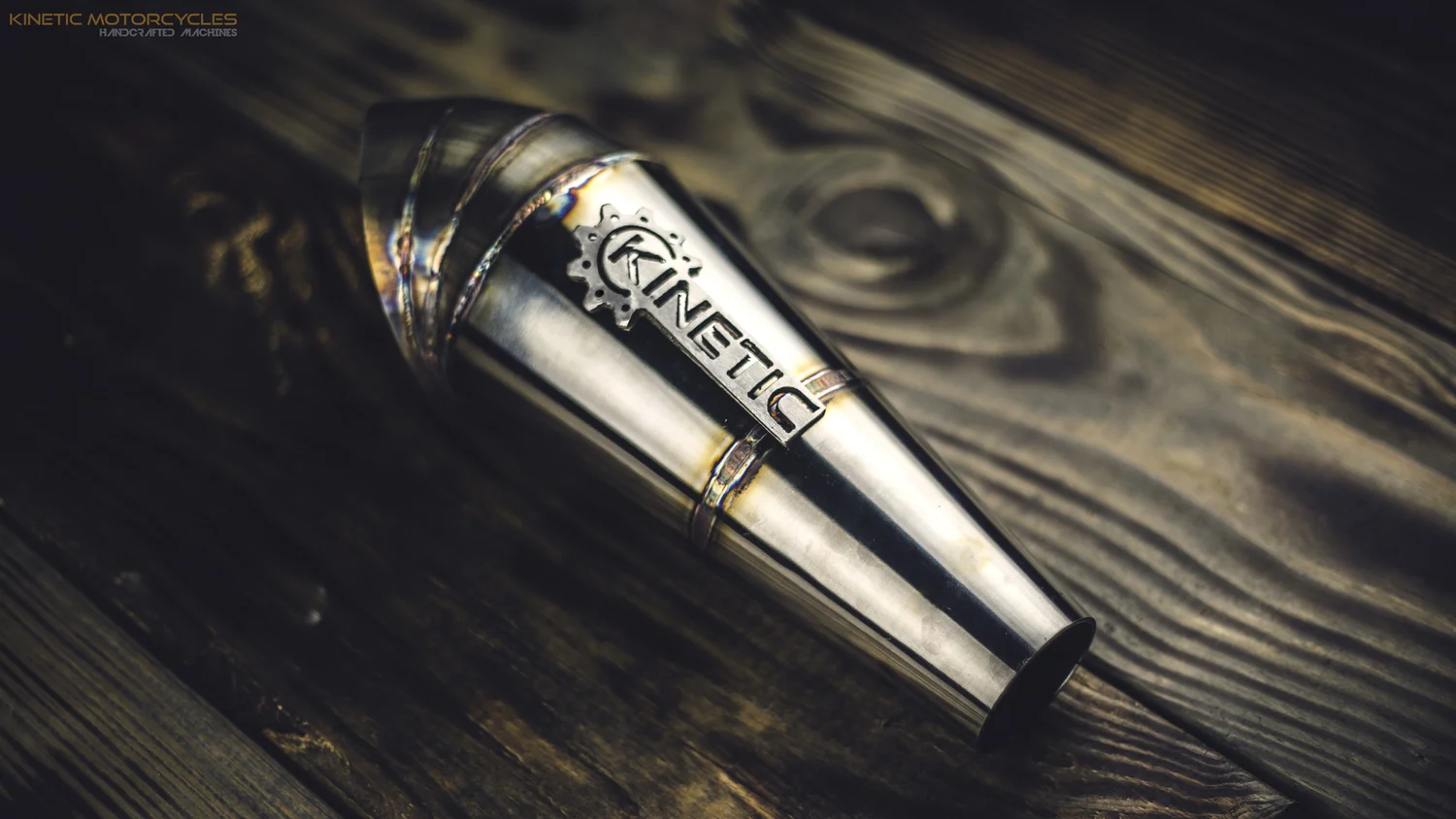
A tapered-cone slip-on silencer in 304 stainless, resonated and fiberglass-packed. The muffler-only route when your Dyna's headers are sound and only the can needs refreshing. Match the slip-on size to your header's outside diameter.
What Neither Setup Will Fix
Neither a dyna 2-1 exhaust nor a dual system will meaningfully raise horsepower on its own. Both need a supporting intake and tune to turn an exhaust flow improvement into a verified dyno number.
Neither will quiet a worn top end, a loose primary chain, or a failing charging system. Exhaust noise just makes those existing mechanical sounds harder to isolate by ear.
Styling preference is not a performance decision either way. Picking staggered duals for the classic look is a completely valid choice, and it should not be dressed up as a performance argument it is not making.
Neither swap will improve fuel economy in a predictable, reliable way either. A well tuned system of either layout runs close to stock efficiency, while a poorly tuned one, regardless of pipe count, tends to run rich and waste fuel rather than deliver any economy benefit.
Legal Checks Before You Buy
Any replacement exhaust sold for street use must carry a permanent compliance label under 40 CFR Part 205, Subpart E, identifying the manufacturer and the noise standard it meets.
Three checks apply regardless of which layout you choose:
Confirm the listing shows a street legal compliance label, not a closed course only disclaimer
Check whether removing a stock crossover pipe or catalytic converter affects emissions legality in your state
Verify your state's specific noise inspection rules before committing to either setup
These checks apply the same way to a 2 into 1 system as they do to staggered duals. Neither layout gets a pass on compliance just because it is more common or more traditional looking on the Dyna platform.
Final Thoughts
Riding style, not brand loyalty or garage tradition, should decide between a dyna 2-1 exhaust and dual pipes. Choose the 2 into 1 layout if low-end torque and cornering clearance matter more to you than the classic silhouette.
That recommendation flips for a rider who values the traditional Dyna look above all else, since staggered duals deliver that specific styling in a way no 2 into 1 system can replicate.
Whichever layout you pick, budget for a tune once you commit, and check ground clearance against your specific bike's ride height before you order.
There is no universally correct answer buried in a dyno chart or a forum thread. There is only the answer that fits how you actually use your Dyna, day to day and corner to corner, season after season.
Ready to Choose? Explore Kinetic Motorcycles
Kinetic Motorcycles builds both layouts in-house in Houston, Texas, from stainless steel with TIG welded joints, so the decision comes down to riding style rather than compromising on build quality either way.
Every system ships with the mounting hardware and gaskets needed for a clean install, and the team can answer clearance and tuning questions by model year before you order rather than after installation day. That upfront answer is worth more than another sound clip when you are trying to decide between two setups that both have genuine merit.
Browse Kinetic's Harley Davidson Dyna exhaust lineup to compare both layouts in one place, and request a fitment check on your exact model year and control setup before you order.
Frequently Asked Questions
-
In most comparisons, yes, especially in the low and midrange where street riders live. A dyna 2-1 exhaust merges both pulses into one collector, improving scavenging. The advantage narrows at high RPM, and gain depends on your cam and intake.
-
Not necessarily. Loudness depends on baffle design more than pipe count. A dyna 2 into 1 exhaust tends toward a deeper, continuous growl, while staggered duals bark with more separation. Check decibel rating rather than assuming one pipe is louder.
-
Usually yes, especially on EFI Dynas. Both a dyna 2 into 1 exhaust system and a full dual swap change backpressure enough to shift the air-fuel ratio. EFI bikes need a remap; carbureted Dynas need rejetting instead.
-
Less often than staggered duals. A 2-1 system tucks a single pipe tighter, giving up less clearance than higher, wider duals. Clearance varies by product, so check the stated lean angle before ordering dyna 2 1 exhaust pipes.
-
The best 2 into 1 exhaust for Dyna riders on a budget is usually a stainless steel system with a simple baffle. Stainless outlasts chrome against road salt, so confirm model-year fitment before comparing prices further.
-
Mechanically yes, in nearly all cases, since the frame mounts and head pipe flanges stay the same. Keep your original duals in good condition, and plan a second tune when you switch back, since fuel needs change again.
-
Yes, generally. The crossover pipe improves low-rpm scavenging on staggered duals, so removing it for a cleaner look costs low and midrange torque. Keeping it, or choosing a dyna 2-1 exhaust instead, preserves more of that benefit.
-
Staggered duals usually hold value better, since that silhouette matches what most Dyna buyers expect. A Harley dyna 2 into 1 exhaust appeals to a smaller performance-focused group, so keep the stock system if broad resale appeal is your priority.