
Want a Deeper Sound from Your Triumph Bobber? Here's What to Consider
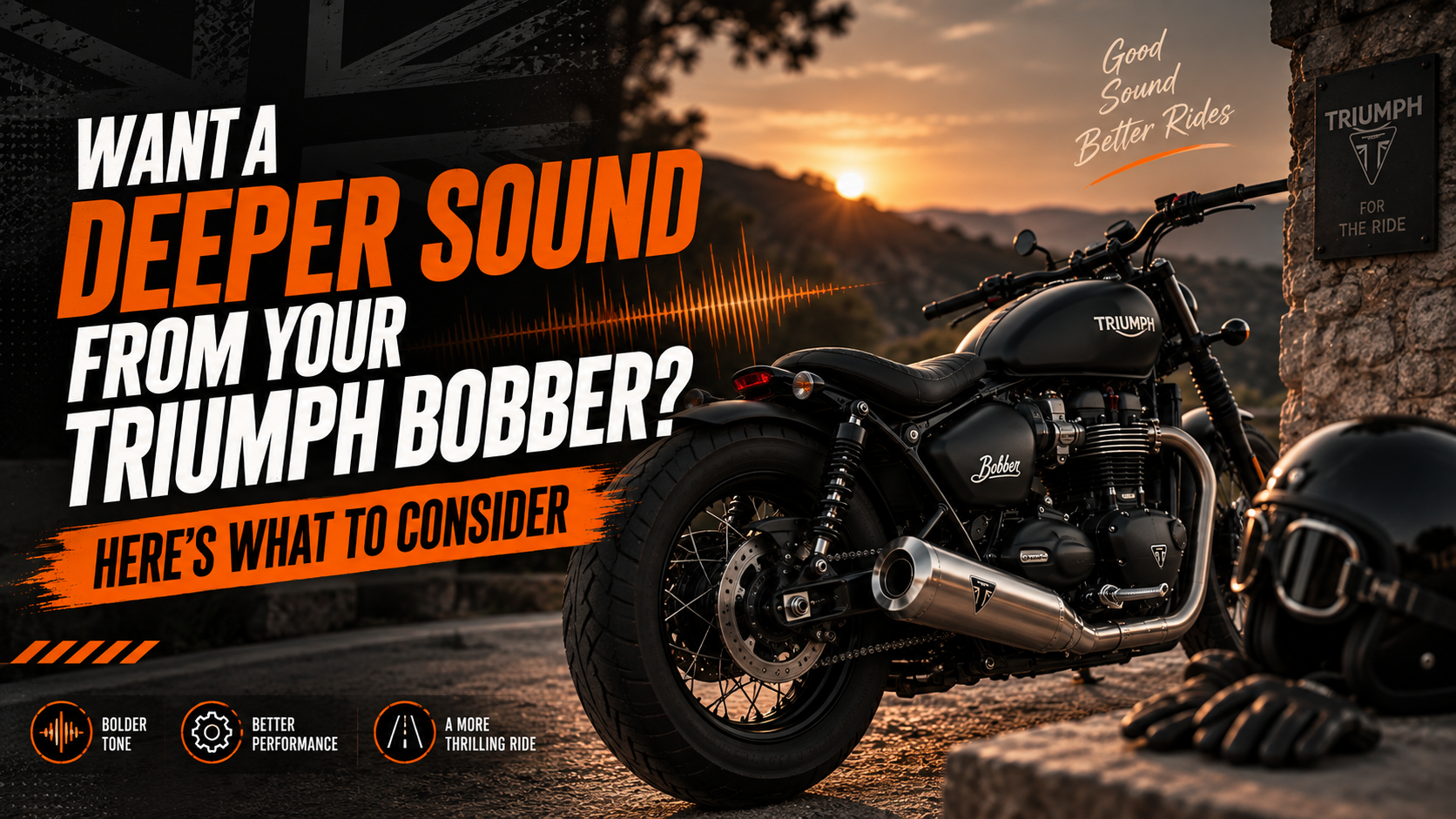
The Triumph Bobber looks like it should sound like trouble. Low, stripped back, and finished like a 1940s custom build, it has the attitude of a bike that growls.
Then you start it up, and it burbles politely instead. The stock exhaust is tuned for certification labs and dealership test rides, not for the character the bike's styling promises.
That gap between look and sound is exactly why triumph bobber exhaust systems sell as fast as they do, and exactly why so many riders end up disappointed with their first purchase.
The disappointment usually comes from the same place. A rider buys the loudest looking pipe in a video, skips the fitment and tuning questions entirely, and ends up with a bike that runs rough or sounds nothing like the clip that sold them.
Here is what actually decides whether an upgrade delivers the sound you want, or just costs you money and a trip to a tuner:
Whether you need a slip-on or a full system for the sound gap you are trying to close
How the change affects your catalytic converter and fuel mapping
Whether baffle design gives you the flexibility you actually want
What the system is built from and how it holds up over time
The Quick Answer on Triumph Bobber Exhaust Systems
Most riders get the sound they want from a quality slip-on, which replaces only the mufflers and needs no retuning in most cases. A full system replaces the head pipes and often removes the catalytic converter, delivering a bigger transformation in sound and weight, but it usually requires a fuel remap to run correctly afterward. Start with a slip-on if you want a deeper note without touching the fuel system. Move to a full system only if you want the maximum transformation and are prepared to budget for a tune alongside it.
Why the Stock Triumph Bobber Exhaust Undersells the Bike
Every Triumph Bonneville Bobber has to pass the same noise and emissions certification as any other motorcycle sold for street use, regardless of how aggressive its styling looks on the showroom floor.
That certification process rewards a quiet, restrictive exhaust path, since pass-by noise testing and emissions testing both favor less flow and more sound dampening. The factory system is a compliance solution wearing a custom bike's bodywork.
Liquid cooling adds a further constraint that air-cooled bobber builds from decades past never had to work around. The stock system has to manage heat near the radiator and coolant lines, which further limits how aggressively Triumph can open up the flow path without engineering complications the factory is not willing to take on for a mainstream production model.
Triumph leans into this contrast deliberately. Recent model years even market a factory hot rod engine tune alongside slash-cut silencers, acknowledging that riders want more character than a fully stock exhaust naturally provides.
The aftermarket exists to close that specific gap, between how the Bobber looks parked in a driveway and how it actually sounds when you thumb the starter.
It is worth naming what the aftermarket cannot do here too. No triumph bobber exhaust system reshapes the engine's actual character. A parallel twin sounds like a parallel twin regardless of the pipe bolted to it, and the upgrade amplifies and reshapes that existing voice rather than replacing it with something the platform was never built to produce.
That distinction matters when you are comparing sound clips online. A pipe that makes a V-twin sound aggressive will not translate the same way onto a Bobber's parallel twin firing order, so judge clips recorded on the actual platform and the actual model year rather than a different engine layout entirely.
What to Consider Before You Buy Triumph Bobber Exhaust Systems
Work through these four factors before comparing specific products. The first two determine whether the system will run correctly. The last two shape the experience once it does.
1. Slip-On or Full System
A slip-on replaces only the mufflers, sliding onto the stock head pipes and catalytic converter you already have. It is the simpler, lower risk path to a deeper triumph bobber exhaust note.
A full system replaces everything from the head pipe back. Many full systems remove the catalytic converter entirely, which changes both sound and backpressure enough to affect the fuel mixture.
Cost tracks the complexity difference closely. Slip-ons for the Bobber platform generally run a few hundred dollars, while full triumph bobber exhaust systems with a crossover pipe and matched mufflers typically run closer to a thousand dollars once you include the hardware and gaskets needed for a clean install.
Choose based on how big a transformation you actually want. A slip-on satisfies most riders chasing a deeper note without opening up a tuning project alongside it.
Installation time reflects the same divide. A slip-on is typically a thirty to sixty minute driveway job with basic hand tools, while a full system install often takes an afternoon and benefits from a shop lift if the exhaust hanger points are tight to access.
Think about resale and reversibility too, since both matter more than most riders expect at purchase time. A slip-on lets you box up the stock mufflers and revert easily if you sell the bike or move somewhere with stricter noise enforcement. A full system with a cat-delete is a more permanent commitment, since reinstalling a stock catalytic converter later means sourcing that specific part again.
2. Catalytic Converter and Tuning Needs
Full exhaust systems for parallel twin platforms typically use either an X-pipe or an H-pipe crossover connecting the two head pipes ahead of the mufflers, and both sit near the catalytic converter location on the stock system.
An H-pipe tends to produce a deeper, more rounded tone and commonly replaces the catalytic converter entirely. An X-pipe generally produces a higher-pitched, sportier note and more often retains the option to keep a catalytic converter in the flow path.
Removing the catalytic converter without a corresponding fuel remap risks running lean, since the stock ECU expects the backpressure and oxygen readings the stock system was calibrated around. Budget for a professional tune whenever a full system deletes the cat, not as an optional upgrade but as a required companion purchase.
Some full systems retain a small secondary catalytic converter or an emulator plug specifically to keep the stock ECU happy without a full tune. If avoiding a dedicated tuning session matters to you, ask directly whether the specific system you are considering includes that provision before assuming every full system behaves the same way.
3. Baffle Design and Sound Adjustability
Removable baffle systems let you run quieter for daily commuting and pull the baffles for a weekend ride, giving you two distinct sound profiles from one triumph bobber performance exhaust purchase.
That flexibility adds mechanical complexity and a bit more maintenance, since baffle hardware can work loose over time and needs periodic checking. Fixed baffle systems skip that complexity entirely at the cost of locking in one permanent sound level.
Test ride or listen to a sound clip at highway RPM specifically, not just at idle. A note that sounds perfect standing still can turn into a fatiguing drone once you settle into a steady cruising speed.
Baffle removal is not always reversible without buying a second part. Some designs use a press-fit baffle that damages slightly on removal, so check whether the specific triumph bobber performance exhaust you are considering supports repeated swapping before planning to switch it back and forth regularly.
4. Material and Finish
Most quality triumph bobber aftermarket exhaust systems use stainless steel for the mufflers, since it resists corrosion far better than plain steel and holds up to repeated heat cycling.
Titanium systems shave additional weight over stainless at a meaningful price premium, and titanium develops a blue and gold heat discoloration over time that some riders love and others consider a defect. Decide which reaction you would rather have before spending the extra money.
Finish quality matters as much as base material. A brushed stainless finish hides small scratches from daily use far better than a mirror polish, which shows every fingerprint and needs regular attention to stay looking new.
Recommended Triumph Bobber Exhaust Options from Kinetic Motorcycles
Kinetic builds for the Bonneville, Thruxton, and Scrambler twins, handmade in Houston from 304 stainless steel. The Bobber shares that twin-cylinder family, so confirm fitment for your exact model and year before ordering.
1. Momentum 21 Exhaust System - from $950.00
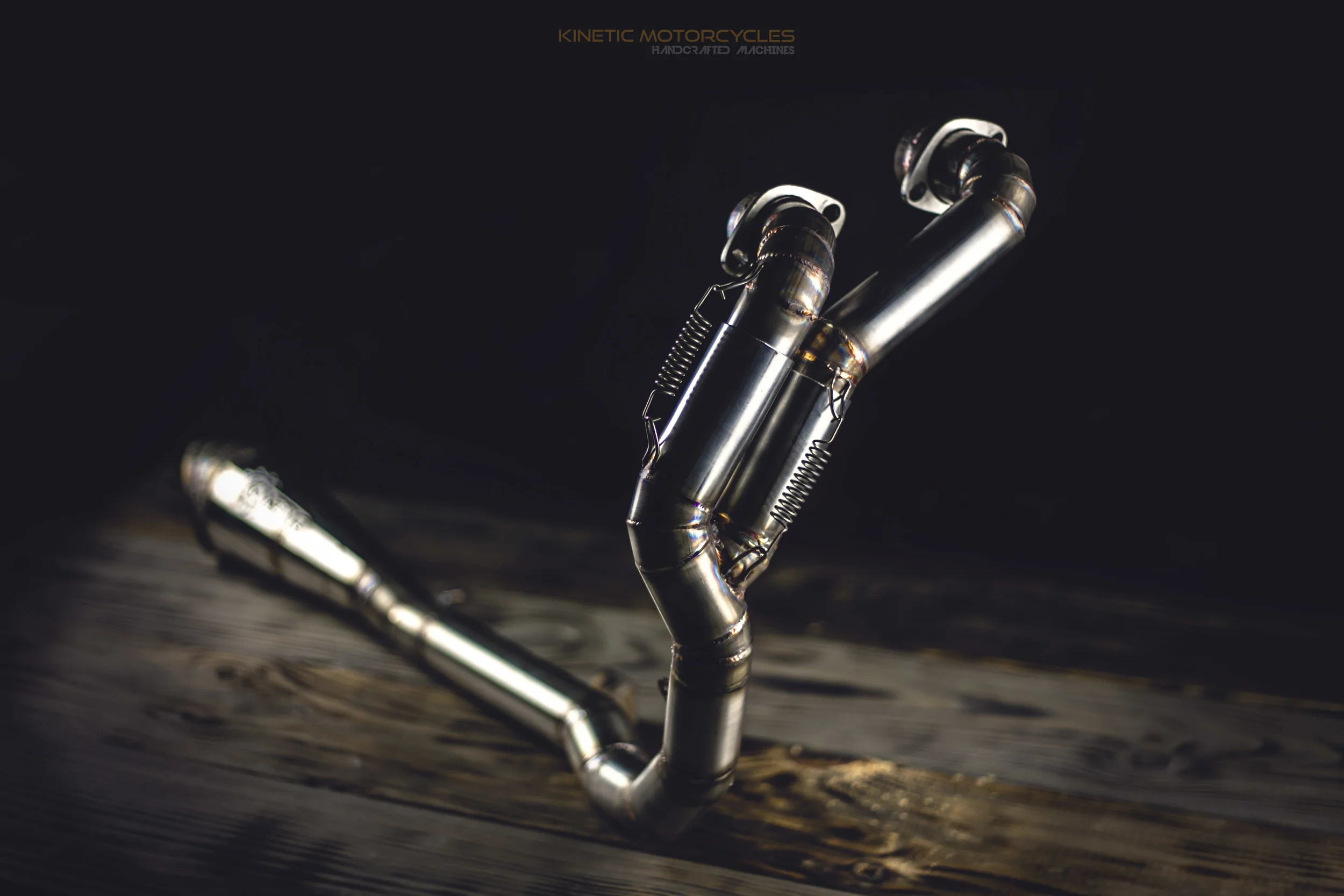
A 2-into-1 with a slip-fit collector for easy installation and removal, and a muffler tucked under the passenger pegs for two-up riding. The flagship triumph bobber performance exhaust route for Bonneville-family twins.
2. Stream Muffler, Universal Slip-On Silencer - $225.00
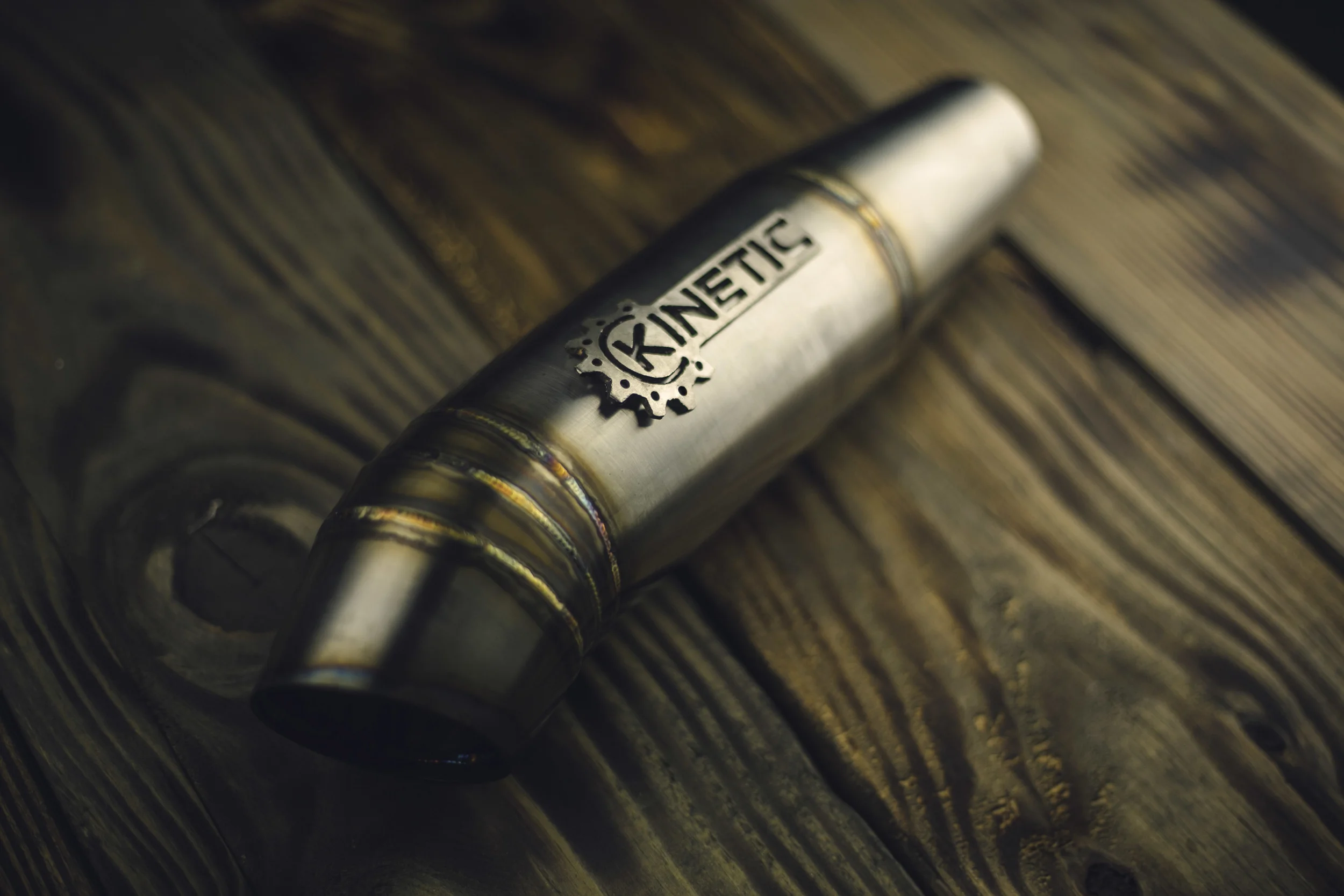
The muffler-only path when your headers are sound and only the silencer needs replacing. 304 stainless, resonated and fiberglass-packed, with slip-on sizing matched to your header's outside diameter.
What an Exhaust Swap Will Not Do for Your Bobber
A new exhaust will not meaningfully improve horsepower on its own. The Bobber's parallel twin responds to the exhaust change mostly in sound and throttle response, not dyno-verified peak numbers, unless it is paired with a corresponding intake and tune.
It will not fix a mechanical rattle, a loose heat shield, or a worn engine mount. A louder pipe just makes those existing noises harder to isolate by ear.
It will not guarantee street legality just because it fits and sounds great. Compliance and physical fitment are two separate checks, and passing one says nothing about the other.
It will also not necessarily improve fuel economy, and a poorly tuned cat-delete system can make it noticeably worse. Treat any efficiency claim on a product listing with the same skepticism you would apply to an unverified horsepower number.
Legal Checks Before You Buy
Any replacement exhaust sold for street use in the United States must carry a permanent compliance label under 40 CFR Part 205, Subpart E, stating the manufacturer and the noise standard the system meets.
Three checks matter specifically for a Triumph Bobber:
Confirm the listing shows a street legal compliance label rather than a closed course only disclaimer
Check whether a cat-delete full system affects emissions legality in your specific state
Verify your state's noise inspection rules, since they can be stricter than the federal baseline
These checks apply the same way to a full triumph bobber exhaust system as they do to any other motorcycle exhaust sold in the United States. Styling and platform do not exempt a system from federal or state compliance rules.
Final Thoughts
The slip-on versus full system decision drives almost everything else about a triumph bobber exhaust upgrade, from cost to tuning requirements to how dramatic the sound change actually is.
That recommendation flips if your only goal is maximum sound and weight savings and you are already planning a professional tune regardless of which system you choose.
For most riders chasing a deeper note without a tuning project, start with a quality slip-on, confirm the compliance label, and decide on baffle flexibility based on how you actually ride day to day.
Whichever path you take, treat the tuning question as part of the purchase decision rather than an afterthought, since it is the single factor most likely to separate a satisfying and genuinely rewarding triumph bobber exhaust systems upgrade from a frustrating and expensive one.
Ready for a Deeper Note? Explore Kinetic Motorcycles
Kinetic Motorcycles designs and builds every exhaust system in-house in Houston, Texas, using stainless steel construction and TIG welded joints rather than mass-produced universal fitments.
That in-house approach means fitment questions get answered by the people who actually built the part, which matters most when you are weighing a full system's tuning requirements against a simpler slip-on install.
Browse Kinetic's Triumph exhaust lineup to compare the twin-family systems side by side, and ask for a fitment check on your exact Bobber model and year before you order.
Frequently Asked Questions
-
A slip-on that keeps the stock headers and converter usually needs none. A full system that deletes the catalytic converter can run lean, so most triumph bobber exhaust systems of that type need a fuel remap afterward.
-
An H-pipe joins the head pipes straight, giving a deeper, rounded tone and often replacing the converter. An X-pipe crosses them for a higher-pitched, sportier note. Neither is better; choose the character you want from your triumph bobber exhaust system.
-
Modifications that cause a failure can affect coverage for that failure. A slip-on carries less risk than a full triumph bobber aftermarket exhaust that removes the converter, so ask an authorized Triumph dealer how yours affects the warranty.
-
They are worth it if you want two sound profiles, quiet for commuting and louder for weekends. The trade-off is baffle hardware that needs occasional checking. For a versatile triumph bobber performance exhaust, removable baffles earn their small added cost.
-
The best exhaust for Triumph Bobber riders who commute is usually a slip-on with baffles fitted. It deepens the note without the highway drone some full systems develop. Test the sound at cruising RPM before removing any baffle.
-
It can, if the fuel is not remapped for the new flow. A proper tune after a converter delete usually restores efficiency and throttle response. Skipping the tune, not the delete, causes most economy complaints on a triumph bobber exhaust.
-
It depends on your goal. A full triumph bobber exhaust system transforms sound and weight more than a slip-on, but usually adds a required tune to the cost. For a deeper note on a budget, a slip-on suffices.
-
A full system that removes the catalytic converter typically saves several pounds, since the converter is among the heaviest parts. A slip-on saves little. Against the Bobber's curb weight, a triumph bobber exhaust upgrade shows most in handling feel.