
Muffler Exhaust System Guide: What Every Rider Should Know
You hear it before you see it. A low drone at 40 mph that was not there last month, or a rattle over speed bumps that sounds like something is loose underneath.
Then comes the smell. Faint at first, then noticeable at traffic lights with the windows down.
Both are your exhaust telling you something, and both are cheap to fix now and expensive to ignore. A muffler exhaust system is not one part. It is five components doing five different jobs, and each one fails in its own way and on its own timeline.
None of this needs mechanical training. It needs knowing which sound belongs to which component, and which symptoms mean this week rather than next month.
This guide covers the whole run from engine to tailpipe:
What each component does, and how it announces that it is failing
The warning signs that mean book an inspection this week
Whether to fit a stock replacement or go aftermarket
What the law says before you order anything
What Does a Muffler Exhaust System Actually Do?
It does four jobs at once. It carries hot exhaust gas away from the engine and safely behind the vehicle, it converts harmful gases into less harmful ones through the catalytic converter, it reduces noise to a legal and liveable level, and it manages engine breathing so the next combustion cycle can start cleanly. When riders say the exhaust is broken they usually mean one component of four has failed, which is why an accurate diagnosis matters more than a quick quote.
Why the Exhaust System Matters More Than Most riders Think
Start with safety. Exhaust gas contains carbon monoxide, which is colourless and odourless. The system exists to move that gas past the cabin and release it behind the vehicle. A leak in the wrong place puts it under the floor instead.
Then efficiency. The engine has to push spent gas out on every cycle. A restricted or leaking exhaust pipe makes that work harder, and the engine management system compensates by adjusting fuelling.
The useful thing about exhaust failures is that they are progressive. A pinhole becomes a crack, a crack becomes a hole. Caught at the pinhole stage it is a small repair. Left alone it takes the section with it.
One more reason to care. A muffler exhaust system in poor condition affects the engine management readings that other systems depend on. Oxygen sensors sit in the exhaust stream, and a leak upstream of one feeds it air it should never see, which skews fuelling across the whole rev range.
The Anatomy of a Muffler Exhaust System
Walk the system in the direction the gas travels, from the engine backwards. Each part has one job and one characteristic way of failing.
The Exhaust Manifold and Downpipe
The manifold bolts directly to the cylinder head and collects gas from every cylinder into a single flow. It runs hotter than anything else in the system and cycles from cold to extremely hot every journey.
That thermal cycling is what kills it. Manifolds crack and manifold gaskets blow, and the symptom is a ticking sound at cold start that quietens as the metal expands and the gap closes.
A cracked manifold is also the failure most often misdiagnosed as an engine problem, because the noise arrives from the front of the car and changes with revs. Ask for a cold-start inspection specifically.
The Catalytic Converter
The catalytic converter uses a coated honeycomb to convert carbon monoxide, unburnt fuel and nitrogen oxides into less harmful gases. It is emissions equipment protected by law, not a performance part you can delete.
Converters fail three ways. They clog, which strangles the engine and causes a sharp loss of power at higher revs. They get contaminated by burning oil or coolant. Or they get stolen, because the metals inside them are valuable.
Theft is worth planning for rather than reacting to. Converters sit under the vehicle within easy reach of a cordless saw, and the replacement cost is high enough that many owners fit a protective shield after the first incident.
The Exhaust Pipe and Resonator
The mid section carries gas along the underside of the vehicle. Somewhere along it sits a resonator, which cancels specific frequencies that would otherwise drone at cruising speed.
This section takes the worst of the environment. Road salt, standing water and stone chips all attack it, and because it is out of sight it is the part most often found rotten during an unrelated service.
Hangers matter here too. The rubber mounts holding the pipe to the underbody perish with age, and once one fails the section it supported starts flexing on every bump. That flexing cracks welds, which is how a five dollar rubber hanger turns into a section replacement.
The Muffler
The muffler reduces noise using a combination of internal chambers, perforated tubes, baffles and sometimes packing material. Chambered designs bounce sound waves into each other to cancel them. Straight-through designs use packing to absorb sound instead.
An exhaust muffler usually rusts from the inside out. Condensation forms inside every time the engine cools, and on short journeys the system never gets hot enough to evaporate it. That is why cars used only for short trips lose mufflers faster.
The Tailpipe and Tips
The tailpipe releases gas clear of the vehicle. Tips are the visible finisher, and on most vehicles they are cosmetic rather than functional.
This is the cheapest part of the system to change and the one that changes performance least. A polished tip on a rotten mid pipe fools nobody who looks underneath.
Muffler design also decides how the car behaves at steady speed. Straight-through designs flow well and can drone at motorway revs. Chambered designs are quieter and better mannered on long journeys, which is the trade most owners actually care about once the novelty of a louder muffler exhaust system fades.
Warning Signs You Need an Exhaust Replacement
Some of these mean book an inspection this week. Others mean plan the work for next month.
Sudden volume increase. The most common first sign, and it usually means a hole has opened somewhere in the run.
Exhaust fumes inside the cabin. Treat this as urgent. Drive with windows open and get it inspected immediately.
Rattling over bumps. Either a heat shield has come loose or the internal baffles in the muffler have broken up.
Hissing or ticking that fades as the engine warms. A classic manifold or gasket leak signature.
Visible rust, flaking or a hanging section. Surface rust is normal, but flaking that leaves brown residue on your hand is not.
A dashboard warning light with a power loss. Often a blocked converter or a failed oxygen sensor reading.
If two or more appear together, an exhaust replacement is usually more economical than repeated patch repairs. Check the whole run before ordering, or work through a fitment guide for your vehicle.
Stock Replacement or Aftermarket Exhaust?
There is no universally correct answer here. There is only the right answer for how you use the vehicle.
One practical note before you choose. Ask whether the quote covers the sections themselves or the sections plus new gaskets, clamps and hangers. The hardware is a small share of the cost and a large share of whether the job lasts.
When Stock Replacement Is the Right Call
A direct replacement restores the vehicle to how it left the factory. Same routing, same noise level, same emissions behaviour, no questions at inspection time.
It is the cheapest route, it protects a lease or a manufacturer warranty, and it needs no tuning. For most riders on most vehicles, this is the sensible choice.
When a Performance Exhaust Is Worth It
A performance exhaust uses wider bores, smoother mandrel bends and less restrictive silencing to reduce back pressure. On a standard engine the power difference is modest. On a modified or turbocharged engine, with matching tuning, it becomes meaningful.
The bigger change is sound, and that is the part you live with daily. A note that thrills on a test drive can become tiring on a two-hour commute, so listen to a recording of the exact system on the same model before ordering.
Material matters more than most buyers expect on any replacement exhaust systems you are considering.
A stainless steel system costs more at purchase and less across ownership. If you keep vehicles a long time or live where roads are salted, a stainless steel exhaust generally pays for itself before you sell.
Fitment is the other thing to confirm in writing. Engine variant, drivetrain and even model year within the same generation can change the routing, and a system that is nearly right will foul something underneath.
Recommended Muffler and Exhaust Systems from Kinetic Motorcycles
Everything above is a decision. Here is what those decisions look like as parts, from a single replacement silencer through to a full performance system. All are designed and made in Houston, and all are cut to order.
1. Stream Muffler - $225.00

The entry point if the silencer is the only part that has failed. A universal-fit exhaust muffler that lets you keep sound sections you are happy with and replace only the one that rusted through.
2. MegaCone Muffler - $225.00
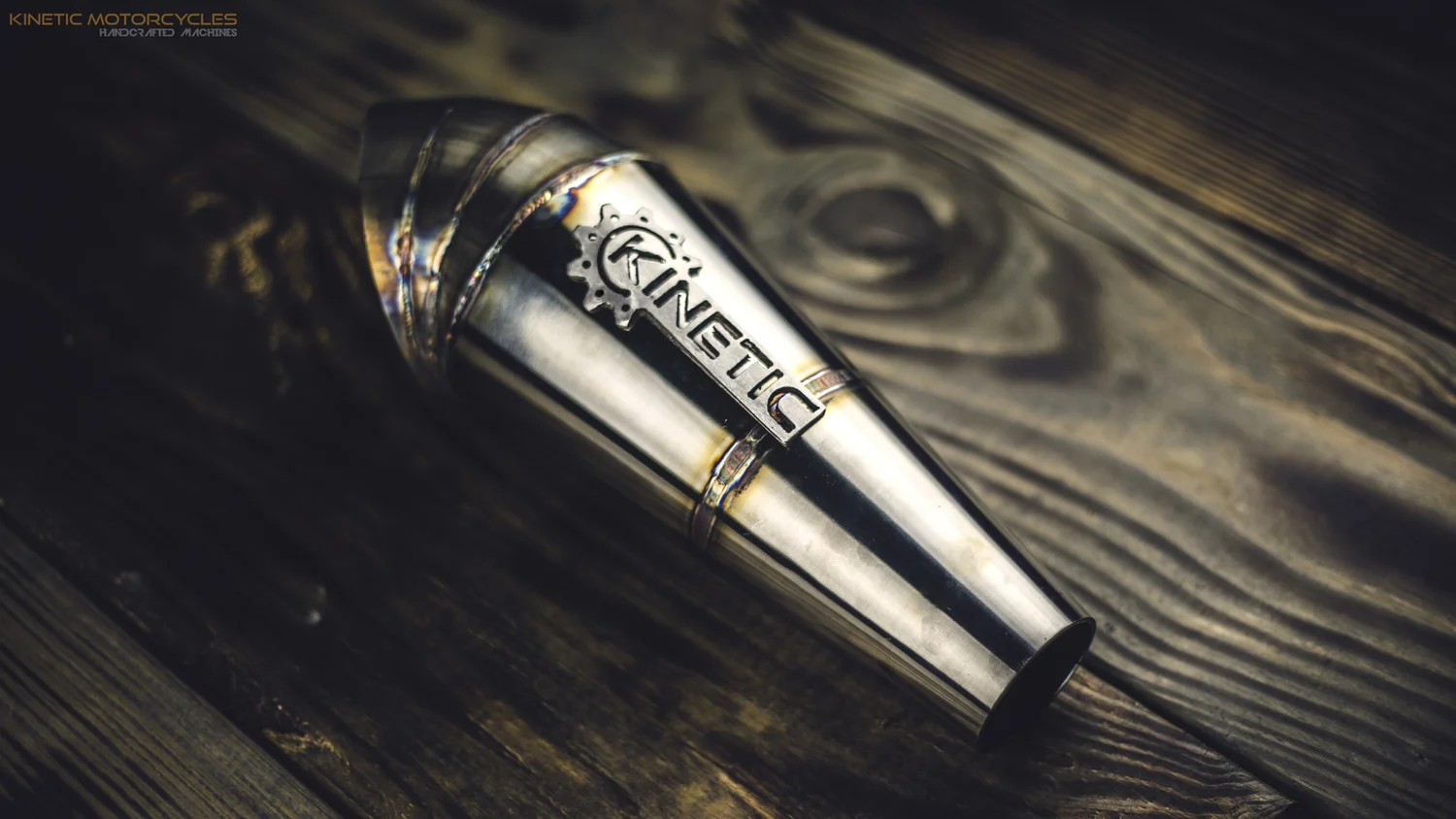
Same price bracket as the Stream with a tapered cone profile, so pick on the silhouette you want. Both are sensible answers when the rest of your exhaust pipe run is still sound.
3. Vertical Twins, Symmetrical Stainless Steel Exhaust for Sportster - $650.00
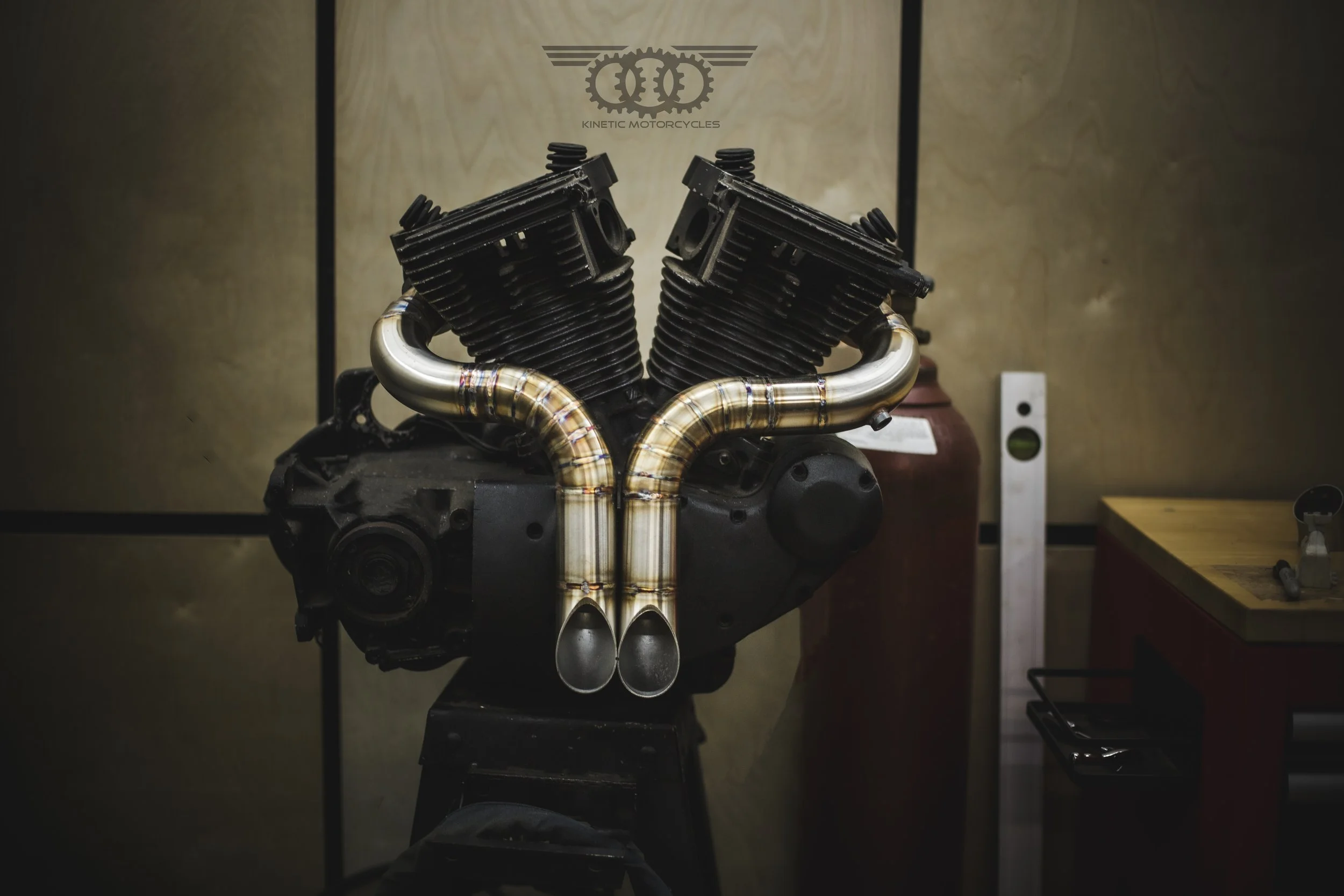
A full 2 into 2 in mandrel-bent 304 stainless with internal ceramic coating. Fits 1986 to 2020 plus Sportsters and works with rear-sets, mid controls and forward controls, which is the fitment question most systems fail.
4. TILT, 2 into 2 Custom Stainless Steel Exhaust for Milwaukee-8 Softail - 900.00
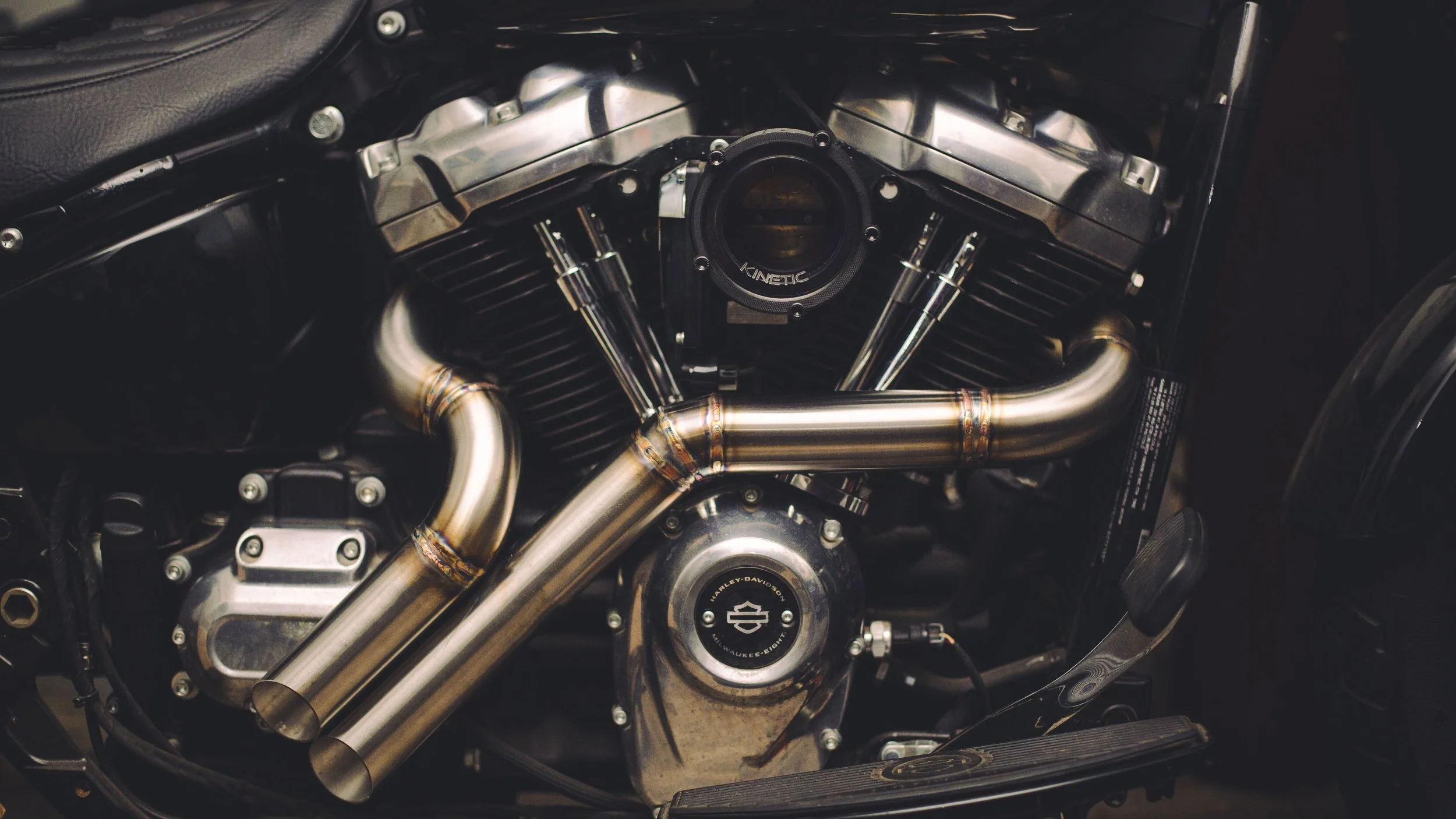
For Milwaukee-8 Softails. TIG-welded 304 stainless with integrated flanges and 14 mm oxygen sensor bungs, so it is EFI compatible out of the box rather than needing a workaround at install.
5. Deluxe Series 1, Precision Crafted Performance Exhaust for Sportster - $1,500.00
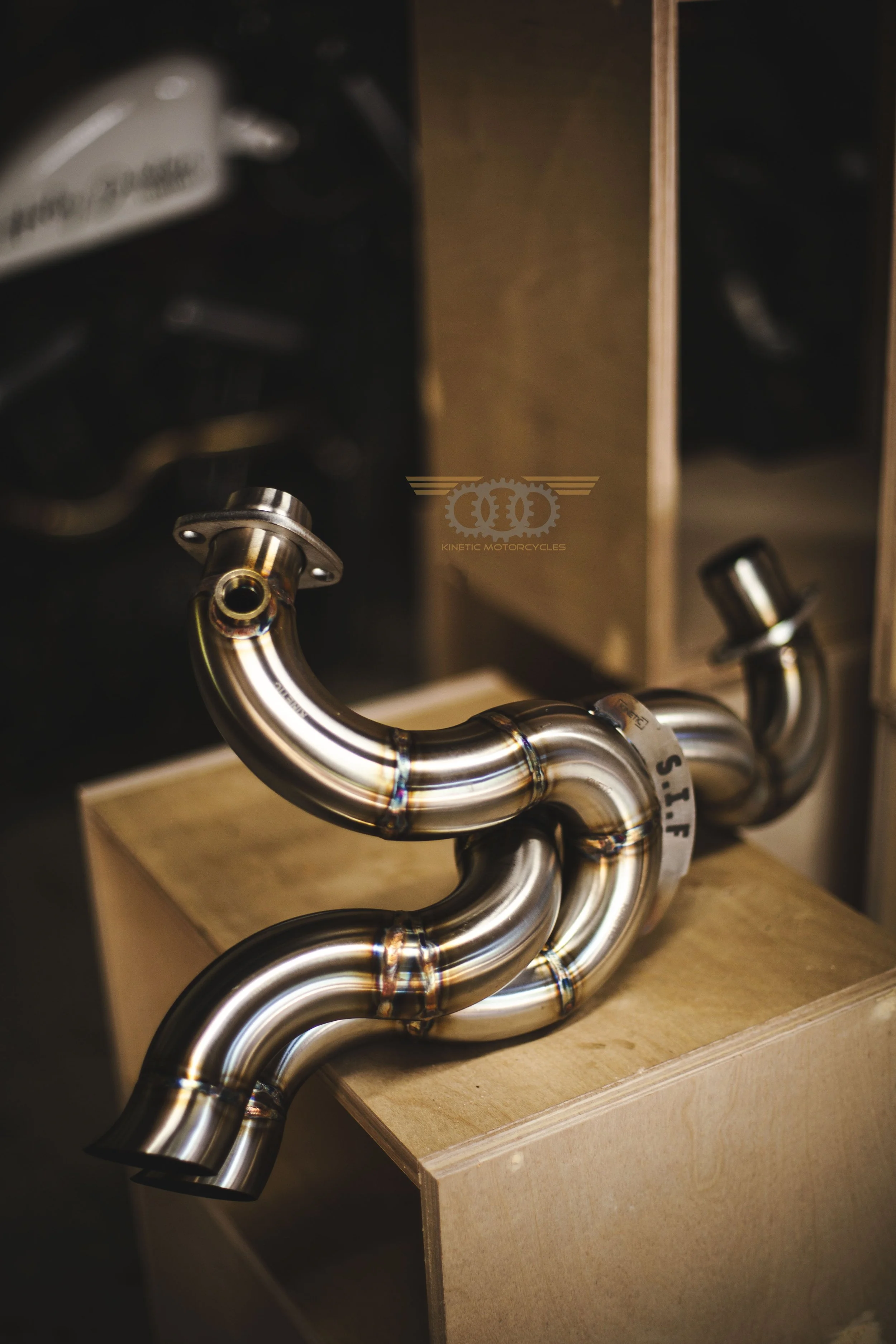
The performance exhaust option. Equal-length construction with no straight tubing, which is the design detail that actually changes how gas leaves the engine rather than just how the bike looks.
6. THE STACK, Sportster Stainless Velocity Stack $220.00
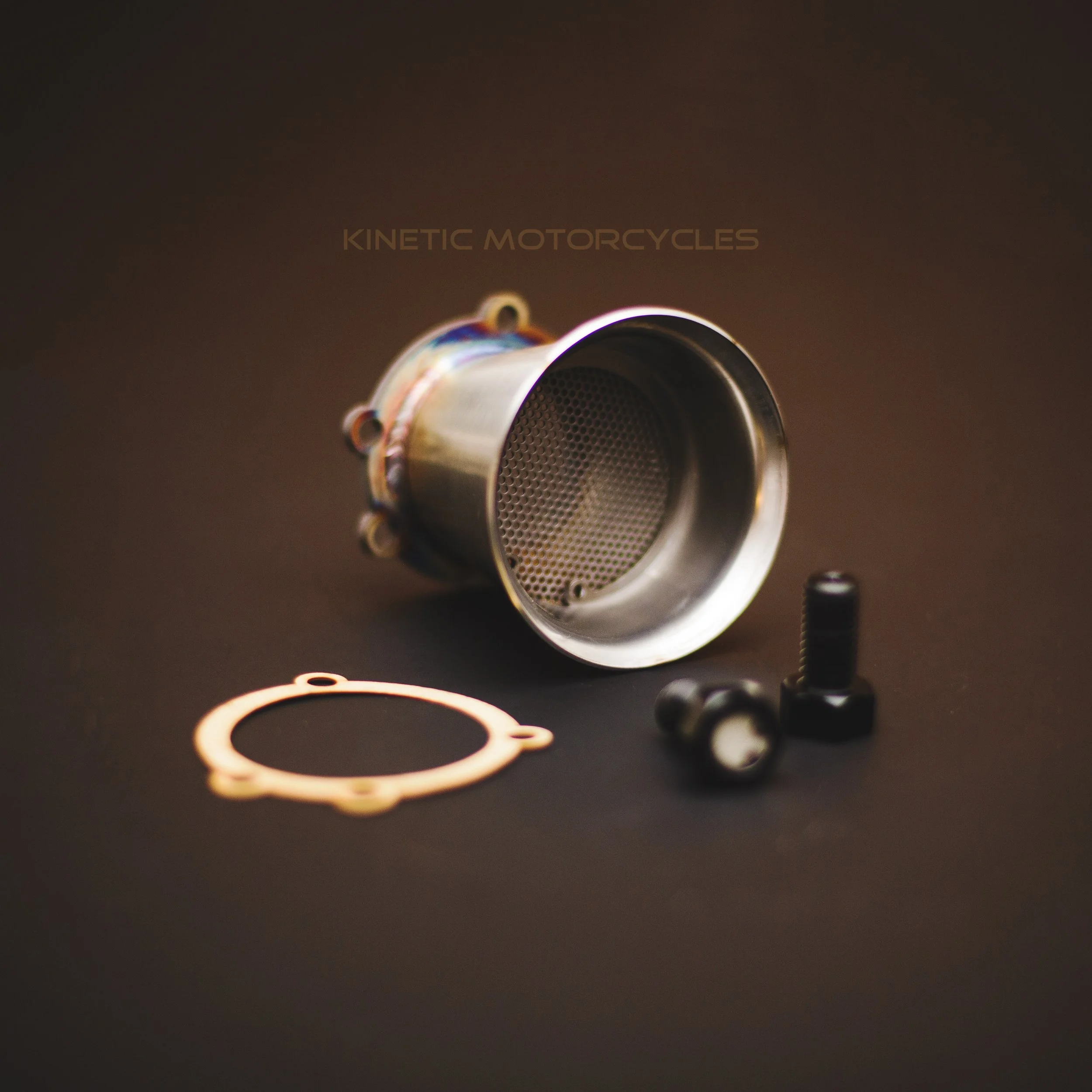
Pair this with any of the above. Exhaust and intake work as one system, and opening the outlet without opening the inlet leaves most of the gain on the table.
If your bike or your build sits outside these fitments, the custom fabrication services page covers one-off fabrication.
What an Exhaust Upgrade Will Not Fix
It will not add meaningful power to a standard engine on its own. Freer flow helps most when the rest of the setup can use it.
It will not improve fuel economy in practice. The theoretical gain is small, and most riders use the throttle more once the car sounds better, which cancels it entirely.
It will not hide a mechanical problem. A new system fitted to an engine burning oil simply makes the smoke easier to see and the misfire easier to hear.
Legal Checks Before You Buy
Under the Clean Air Act, tampering with or removing emissions control equipment on a road vehicle is prohibited. That includes the catalytic converter. A blocked converter must be replaced, not deleted.
Three checks before you order:
Confirm the system retains all emissions equipment fitted as standard to your vehicle.
Check your state or regional inspection rules, which vary considerably and are stricter in some areas than federal minimums.
Check local noise limits. Some regions test them, some enforce on complaint, and a very loud car exhaust system attracts both.
None of this makes aftermarket exhaust illegal. It makes uninformed buying expensive.
And it will not last if the underlying cause is ignored. Fitting a new muffler exhaust system to a vehicle that rusted the last one out in three years, without addressing short journeys or underbody protection, buys you the same outcome on the same timeline.
Final Thoughts
Diagnose the component, not the noise.
Almost every expensive exhaust bill starts as a cheap one that was left for another six months. A pinhole is a small repair. The same hole a winter later takes the section with it, and often the section next to it.
The owners who spend least on exhausts are not the ones who buy the most expensive systems. They are the ones who get the run looked at once a year and fix the small thing while it is still small.
Get the full run inspected on a lift rather than replacing the part that is loudest. Then decide between stock and aftermarket based on how long you are keeping the vehicle and where it lives, not on how a system sounds in a video.
Ready to Replace Your Exhaust? Explore CLIENT BRAND NAME
Kinetic Motorcycles supplies exhaust systems, mufflers and components with fitment confirmed before you order. Browse the muffler range or ask for a check against your exact make, model and engine.
Visit https://www.kineticmotorcycles.com to explore your options or get advice on the right system for your vehicle.
Frequently Asked Questions
-
Most factory exhaust systems last 5–10 years, depending on driving habits, climate, and material quality. Frequent short trips, road salt, and moisture accelerate corrosion. Annual inspections after the fifth year help detect small issues early and prevent expensive exhaust replacements.
-
A failing muffler typically causes louder exhaust noise, rattling sounds, excessive rust, vibrations, or exhaust fumes inside the cabin. While increased noise is common, exhaust smells inside the vehicle require immediate inspection because they may indicate a dangerous exhaust leak.
-
Yes, if the rest of the exhaust system is in good condition. However, because surrounding pipes usually age at the same rate, inspecting the entire system before replacing only the muffler helps avoid additional repairs shortly afterward.
-
For many riders, yes. Stainless steel offers superior resistance to corrosion and heat, often lasting significantly longer than aluminised steel. It's especially worthwhile in regions with salted roads or for owners planning to keep their vehicle for many years.
-
Generally, no noticeable improvement should be expected. Modern engines already optimize exhaust flow efficiently. While minor efficiency gains are possible, driving habits usually offset them. Choose a performance exhaust for improved sound, durability, and performance rather than fuel savings.
-
The sound level depends more on the exhaust's internal design than its brand. Straight-through systems are typically louder, while chambered designs provide a deeper tone with less drone. Listen to recordings from your exact vehicle model before purchasing.
-
No. Removing or tampering with a catalytic converter is illegal for road vehicles under the Clean Air Act. A faulty converter should always be replaced with a compliant unit to maintain emissions compliance, pass inspections, and avoid engine warning lights.
-
Exhaust replacement costs vary depending on the damaged components, material type, vehicle model, and labor required. Replacing a single muffler costs far less than installing a complete stainless steel exhaust system with a catalytic converter. Always request a complete repair quote.