
Triumph Motorcycle Exhaust Pipes: What to Know Before You Upgrade
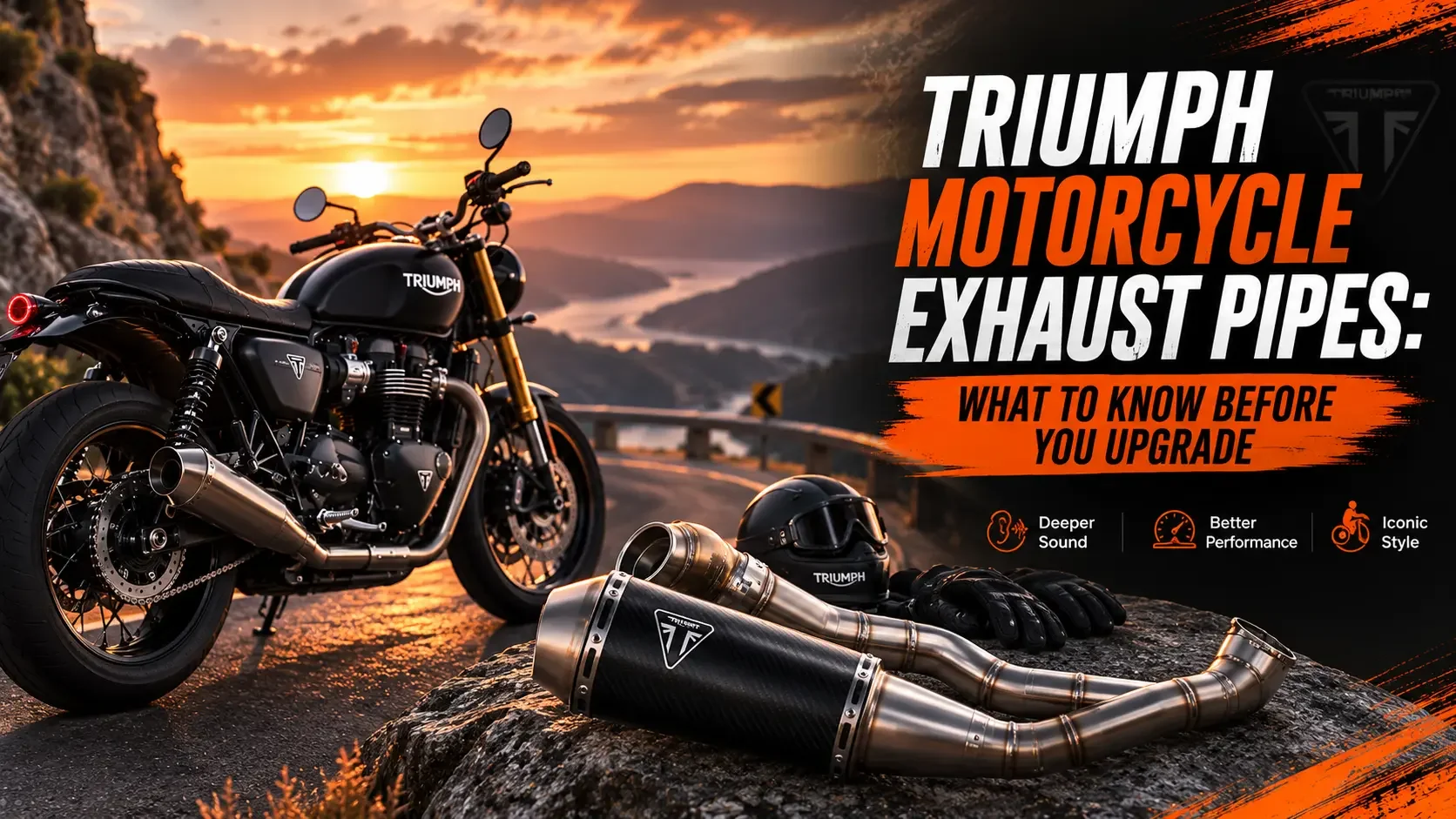
A Triumph looks like it should sound like something.
Then you start it and the factory system delivers something carefully managed instead, which is a compliance achievement and a character disappointment at the same time.
That gap is why Triumph motorcycle exhaust pipes are the most common first modification across the range. The question is not whether new pipes change the bike. They do, immediately and obviously. The question is which set of trade-offs you want to live with.
Because that is what this decision really is. Every choice below is a pair, and picking one side means accepting what the other side offered:
Confirm whether you want reversibility or maximum gain
Confirm whether you want the twin-pipe silhouette or the lighter single
Confirm whether you are buying durability or weight saving
Confirm whether you want volume or depth, and whether you will fund a tune
None of it needs mechanical training. It needs deciding which side of each pair you want, then asking a seller to confirm it in writing.
What Changes When You Upgrade Triumph Motorcycle Exhaust Pipes?
Two things change the moment the system is bolted on. The bike sounds substantially better, and it loses weight, often several pounds and sometimes considerably more with a full titanium system. Two further changes depend entirely on fuelling: stronger mid-range and cleaner throttle response only arrive once the air-fuel ratio is corrected for the new flow. Fitted without a tune, a new system frequently feels flat exactly where you ride most, which is why so many riders wrongly blame the pipe rather than the missing calibration.
Why the Factory System Is Built the Way It Is
The system fitted at the factory is engineered around noise regulations, emissions compliance and production cost. Triumph Motorcycles Ltd meets all three on every bike it sells, and meeting them has consequences.
It means a large catalytic converter in the collector or mid pipe, heavy internal baffling, and thick-walled steel throughout. The assembly is heavy, and on twin-silencer models that weight sits high and on both sides.
None of that is a fault. It is a set of choices made for reasons unrelated to how the bike rides, and unwinding some of them is exactly what an upgrade does.
Worth knowing before you shop: you are not buying horsepower off a shelf. You are removing a designed-in restriction, then paying separately for the calibration that lets the engine use the room you created. Two riders can fit identical Triumph motorcycle exhaust pipes and describe completely different bikes, because one tuned and one did not.
Eight Comparisons That Decide Your Triumph Exhaust
Slip-On Against Full System
A Triumph slip on exhaust replaces the silencers only and clamps onto the factory collector. A full system replaces everything from the headers back.
Slip-ons are the accessible route. Modest cost, an hour or two of work, and fully reversible, which makes them a low-risk way to learn what tone you actually want before committing. Most of the Triumph slip-on range covers the common models.
Full systems open the whole gas path and save far more weight, particularly on models with a large factory converter. They also demand tuning rather than merely benefiting from it, so if you are weighing full system options, budget the calibration at the same time.
One caution on cost. A slip-on plus a fuel module often lands close to a bare full system, so compare complete setups rather than headline prices when weighing Triumph motorcycle exhaust pipes against each other.
Twin Pipes Against a Single Silencer
Twin silencers define the silhouette of the Modern Classic range, and on a Triumph Bonneville in particular the symmetry is a large part of why the bike looks the way it does.
A single silencer saves more weight and concentrates it on one side, which changes how the bike feels at walking pace and in tight turns. It also opens up more room on the opposite side, which matters on bikes with luggage or a pillion.
Neither is faster. Choose by silhouette and by how you use the bike, then check the trade you are accepting:
Confirm whether the single-sided option affects pillion peg or luggage clearance
Confirm whether the twin option adds heat near either leg in slow traffic
Confirm the weight difference between the two in a stated figure, not a description
Heat and clearance follow from the layout as well. Twin silencers put warmth on both sides in slow traffic, while a single tucked unit concentrates it and frees space on the other side for luggage.
Stainless Against Titanium
Ask for the grade as a number rather than a description like premium stainless steel. Material predicts how the system looks in three years better than the brand name does.
304 stainless is the durable all-rounder: corrosion resistant, tolerant of repeated heat cycling, and able to be left raw, brushed or polished. Titanium is significantly lighter and develops the blued finish many riders want, at a much higher price and with a thinner wall that dents more easily.
Wall thickness and bend method matter alongside grade. Mandrel bending keeps internal diameter constant through the curve, while crush bending pinches the radius and restricts flow at every bend, however good the Triumph exhaust pipes look in photographs.
Ask for close photographs of the welds and the inside of the outlet before ordering. Any seller confident in their supplier sends them without hesitation, and hesitation is itself an answer about what you would be buying.
Character Against Volume
Tone comes from geometry. Baffle design, core diameter, silencer length and volume, and header routing set the character. Two silencers with the same internals sound close to identical whatever the badge says.
On a parallel twin the useful gain is usually depth and pulse separation rather than raw decibels. A straight-through design with the baffle removed is loud and thin. A well-baffled Triumph muffler can measure quieter while sounding considerably richer, which is what most riders actually want from this engine layout.
Verify before you pay:
Confirm which baffle or db killer is fitted as standard, and whether it is removable
Confirm whether removing it changes the legal status of the system
Confirm there is a recording of this exact silencer on the same model and generation
Live with the answer. A note that thrills for ten minutes can wear thin over a two-hour ride, and long rides decide whether you keep a system or sell it on.
Tuned Against Untuned
Changing exhaust flow shifts the air-fuel ratio the engine was calibrated around. On modern injected Triumphs that means a fuel module or a full remap. On older carburetted models it means rejetting.
Skip it and the engine runs lean. Lean running costs throttle response, raises running temperatures and can cause damage over sustained use. A Triumph performance exhaust fitted without tuning frequently feels flat in the mid-range, which is exactly where a parallel twin does its work.
When a seller quotes horsepower, ask whether the figure was recorded on a dynamometer before or after tuning, and on which model and generation. A chart with no stated tune is not evidence of anything.
There is a simple test after fitting and tuning. Hold a steady throttle in third gear from around 3,000 rpm. If the bike surges or hunts, the calibration is unfinished, whatever the pipes are doing.
Road Legal Against Competition Only
Replacement motorcycle exhausts sold in the United States are federally regulated. The rules sit in 40 CFR Part 205, Subpart E, covering labelling, noise standards and tampering.
Confirm the system carries a permanent compliance label identifying the manufacturer and the standard it meets. No label is a warning about the seller.
Confirm whether it is sold as competition only, which requires a statement that it does not conform to EPA noise emission standards and that road use constitutes tampering.
Confirm your state noise limits, which govern after the federal acoustical assurance period and vary considerably. Many systems are marked as not legal for use in California.
None of this makes an aftermarket Triumph exhaust illegal. It makes uninformed buying expensive, and checking takes five minutes.
Modern Classic Against Roadster and Adventure Fitment
Fitment is the most common reason a purchase goes wrong, because Triumph ranges differ far more than the badge suggests.
Modern Classic twins, Speed and Street triples, and the Tiger adventure family are built on different frames with different mounting points, different header routing and different silencer diameters. Systems do not transfer between them.
Generation matters within a family too. Emissions updates across model years brought larger converters and revised mid pipes, so a system for an earlier bike often will not fit a later one with the same name. Get your exact year, model and generation confirmed in writing, or check against a model fitment guide before ordering.
Keep the original system boxed whatever you fit. Some buyers want it at resale, some regions require it for inspection, and a complete set of factory Triumph motorcycle exhaust pipes in the corner of the garage costs nothing but shelf space.
Part Cost Against Total Cost
The product page price is rarely the price of the change. Budget for the system, the fuel module or remap, fitting if you are not doing it yourself, new gaskets and exhaust springs, and any brackets or heat shields sold separately.
Riders who budget only for the silencers are the ones who run them untuned, dislike the result and buy again within the year. That is the most expensive route of all.
Ask for a photograph of the actual box contents. Sellers supplying complete kits send one without hesitation.
Recommended Triumph Exhaust Pipes from Kinetic Motorcycles
Kinetic builds for the Bonneville, Thruxton and Scrambler twins. Everything below is handmade in Houston from 304 stainless, fully TIG welded in house, internally ceramic coated, and made to order in roughly 2 to 4 weeks.
1. Momentum 21 Exhaust System, 2 into 1 for Triumph Twins - $950.00
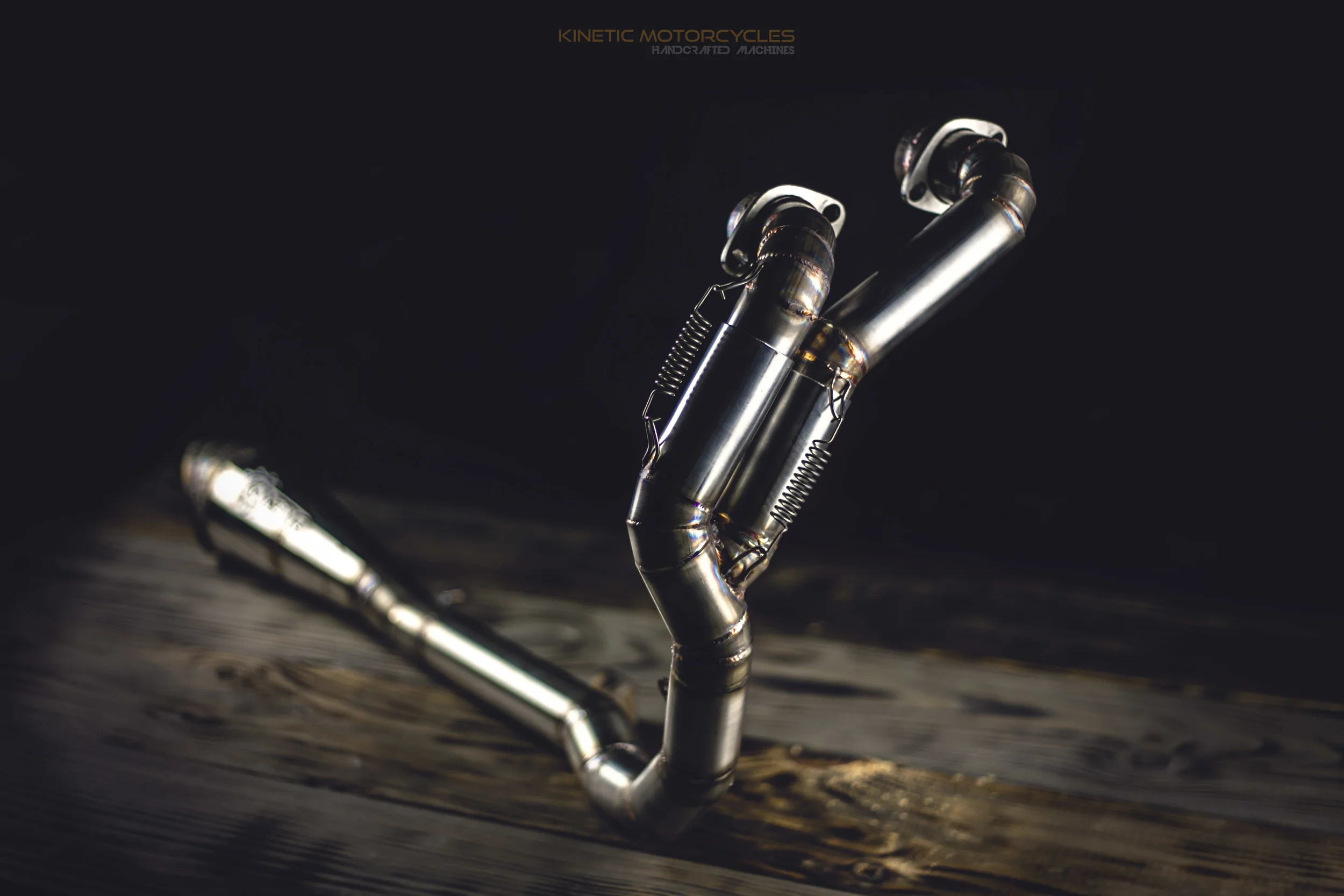
The flagship Triumph performance exhaust. A 2 into 1 with a slip-fit collector for easy install and removal, a handmade resonated muffler cone, and a muffler tucked under the passenger pegs so two-up riding is retained. Fits all Bonnevilles, Thruxtons and Scramblers.
2. Stream Muffler, Universal Slip-On Silencer - $225.00
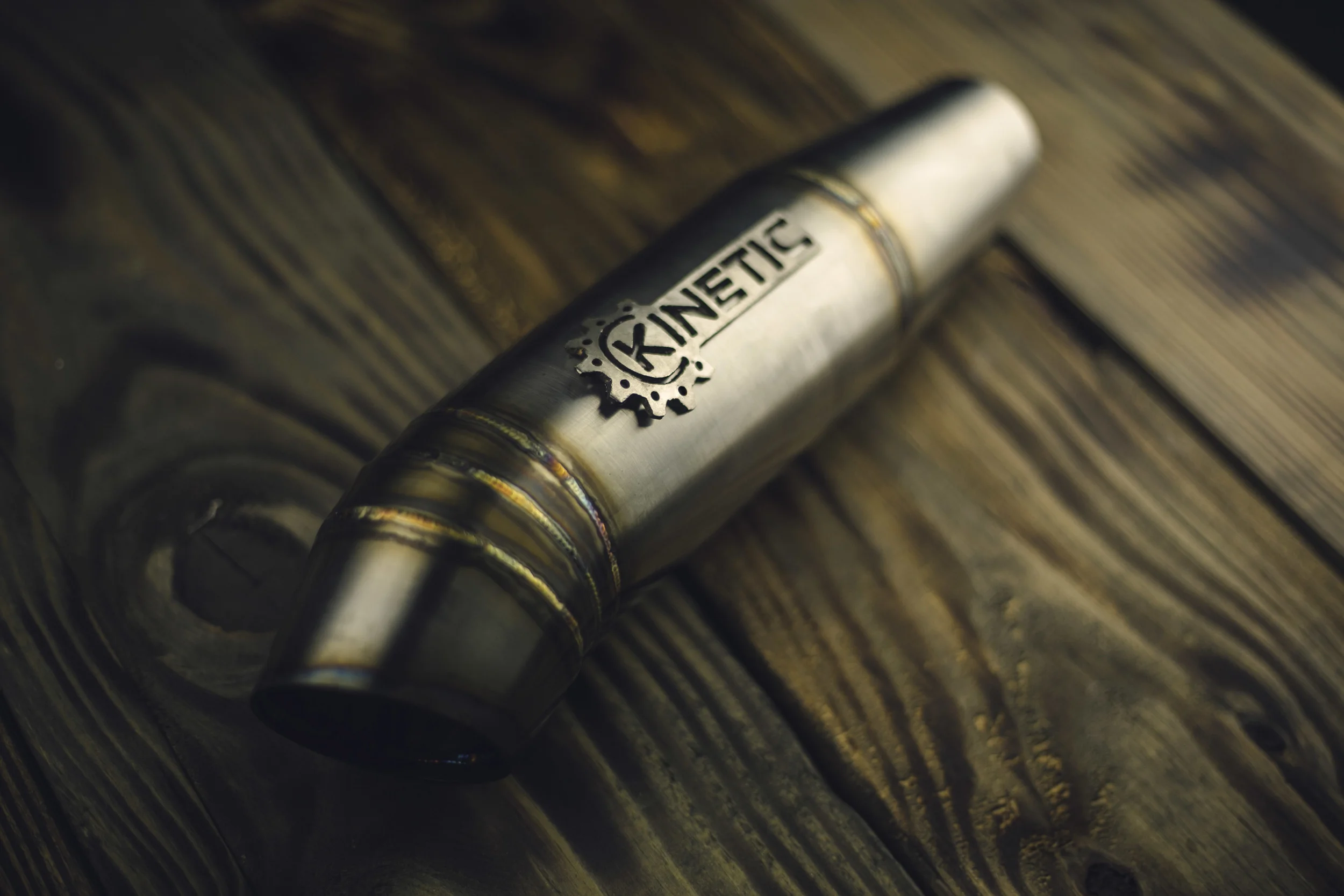
The muffler-only route when your headers are sound and the silencer is the part that has gone. 304 stainless, resonated and fiberglass packed, with slip-on sizing cut to your header outside diameter.
3. MegaCone Muffler, Universal Slip-On Silencer - $225.00
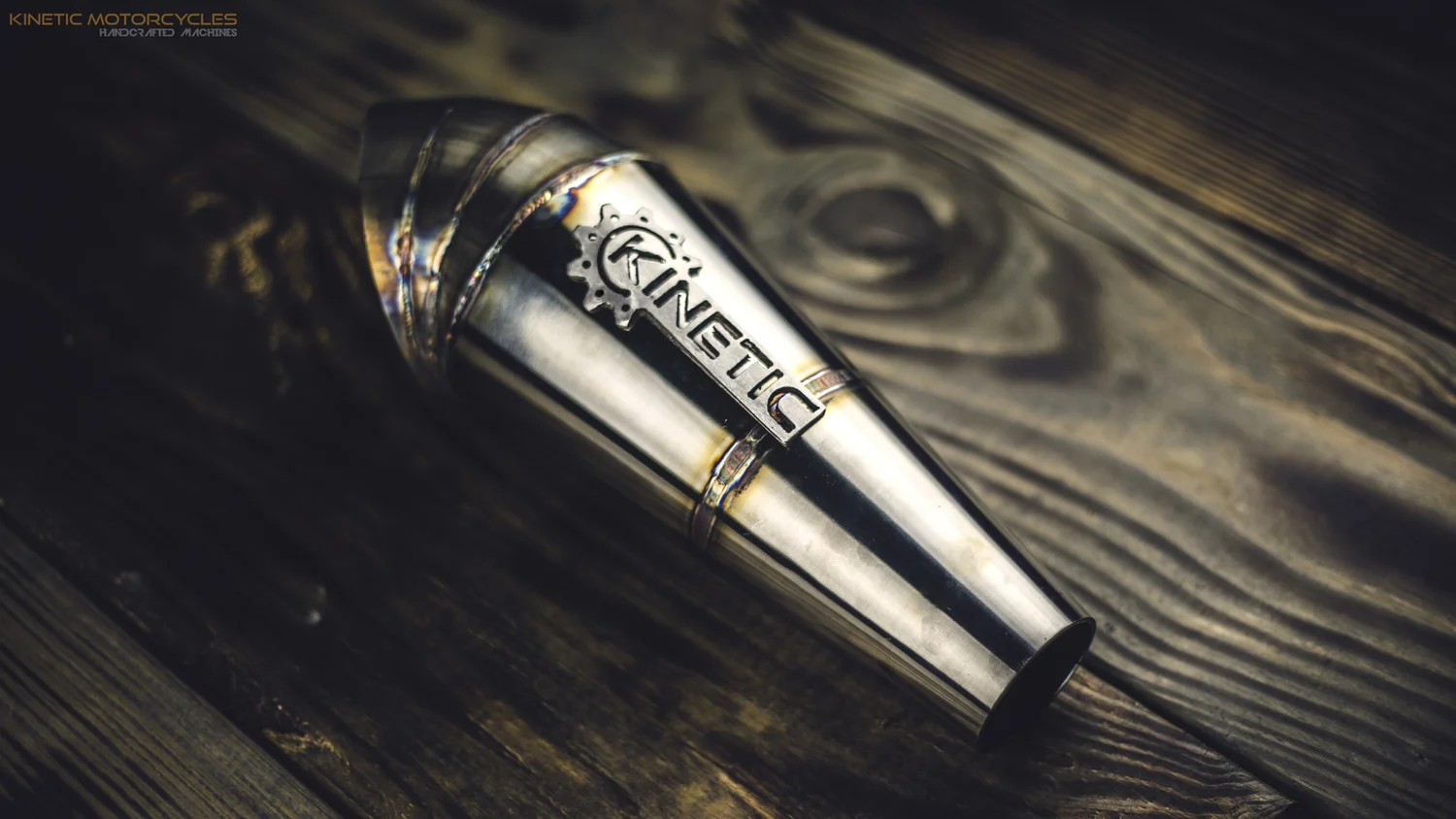
Same build and price as the Stream with a tapered cone profile. On a Bonneville the cone shape reads closer to the classic reverse cone silhouette, so pick on looks rather than specification.
4. Triumph Faceplates | 2xVertical - $275
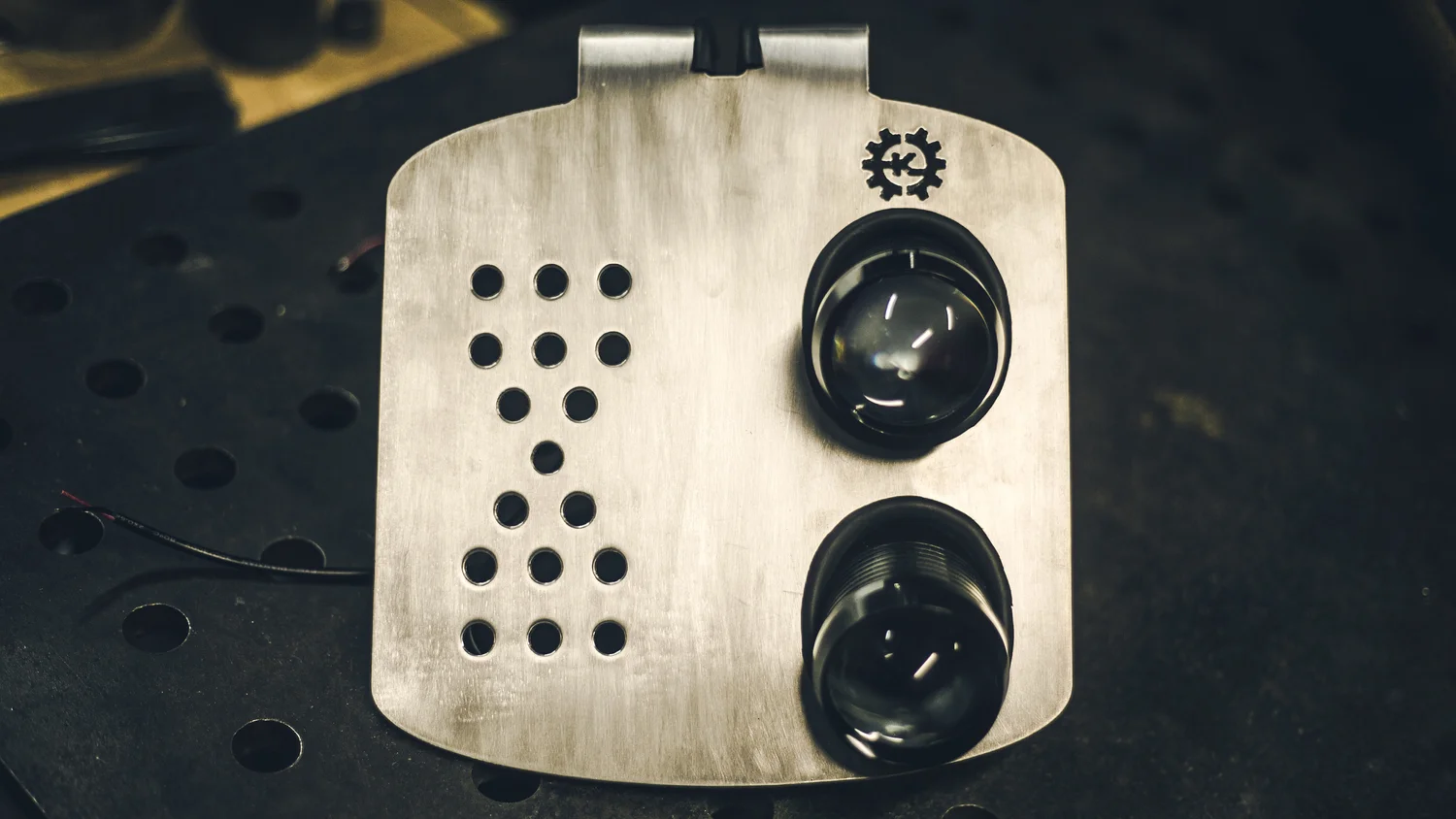
Perforated faceplates and headlight conversions designed for the twins. The part most often fitted alongside an exhaust when riders are reshaping the whole silhouette rather than just the pipes.
5. Triumph Grips | Wide Knurl Grips - $ 10

Machined grips for the Triumph twins. A small, low-cost finisher that ties the cockpit to the new pipes, and the easiest thing to add to an exhaust order rather than paying shipping twice.
6.Triumph Accessories

Tail hoops, plate mounts and relocation brackets for the twins. Worth checking before you order, since exhaust routing changes often force a plate or bracket change at the same time.
For a one-off routing or a model outside the twins, thecustom fabrication services page covers bespoke work. Browse the fullTriumph exhaust range for current options.
What an Exhaust Upgrade Will Not Fix
It will not change the fundamental character of the engine. A parallel twin remains a parallel twin, and the exhaust shapes how that character is expressed rather than replacing it.
It will not add power on its own, and fitted without tuning it often feels worse in the mid-range than the system it replaced.
It will not compensate for deferred servicing. Valve clearances, air filter condition and throttle body balance affect how the bike feels more than most riders expect, and a new pipe simply makes existing faults easier to hear.
And it will not stay as delivered forever. Baffles and packing degrade with heat and miles, so a system that measured acceptably when new can drift louder over several seasons of hard use.
Final Thoughts
Two gains arrive the moment the system is bolted on: weight and sound. The rest arrive when the fuelling is corrected.
That distinction explains almost every disappointed review of a genuinely good product. The pipes were fine. The calibration was missing.
The riders happiest with their Triumph motorcycle exhaust pipes are rarely the ones who spent the most. They are the ones who chose deliberately on each trade-off, then paid for the tune that made the choice work.
Work through the eight comparisons above and write down which side of each you are choosing. Then send that list to two sellers along with your exact year, model and generation, and compare the answers rather than the photographs.
Ready to Upgrade Your Triumph? Explore Kinetic Motorcycles
Kinetic Motorcycles offers a curated range of Triumph exhaust systems chosen for build quality, verified fitment and honest sound, with guidance available before you order rather than after.
Visit www.kineticmotorcycles.com to explore your options or ask for a fitment check on your exact model.
Frequently Asked Questions
-
Yes, for most owners, provided the budget includes both the exhaust and appropriate tuning. Aftermarket systems can improve exhaust sound, reduce weight, and sometimes increase performance. Full systems offer greater gains, while quality slip-ons provide an affordable, reversible upgrade for everyday riding.
-
Neither is universally better. A Triumph slip on exhaust replaces the silencers, costs less, installs easily, and usually retains the catalytic converter. A full system replaces headers and collectors, offering greater weight and flow improvements but requiring more extensive tuning and installation.
-
Usually, yes. Changing exhaust flow can alter the engine’s air-fuel balance and throttle response. A fuel module or remap helps restore proper calibration, particularly with full systems. Ideally, tune the motorcycle on a dynamometer after finalizing the exhaust and intake configuration.
-
It depends on the specific exhaust and local regulations. Some systems meet applicable road-use requirements, while competition-only products may not. Exhausts that remove catalytic converters can create additional emissions concerns. For road riding, choose a compliant system with appropriate certification and emissions equipment.
-
304 stainless steel is the best all-round choice for most riders, offering strong corrosion resistance and durability at a reasonable price. Titanium is considerably lighter and develops an attractive finish but costs more. Carbon sleeves are usually cosmetic coverings over stainless-steel or titanium cores.
-
Sound depends mainly on the exhaust core, baffle, and db killer rather than price or brand. Well-designed systems can produce a deeper, fuller tone without excessive volume. Removing the baffle usually increases noise substantially and may affect both road legality and overall sound quality.
-
Usually not. Triumph models have different frames, mounting points, header routing, collector designs, and silencer dimensions. Model generation also matters because emissions updates can change catalytic converters and mid-pipe configurations. Always verify the exact model year and written fitment information before purchasing an exhaust.
-
Weight savings depend on the system and components replaced. Slip-ons provide modest reductions, while full systems can remove considerably more weight by replacing headers, collectors, and catalytic converters. Titanium systems typically save the most. Reducing high-mounted exhaust weight can noticeably improve handling and balance.