
Is Your Harley Davidson 1200 Sportster Too Quiet? These Exhaust Options Can Change the Sound
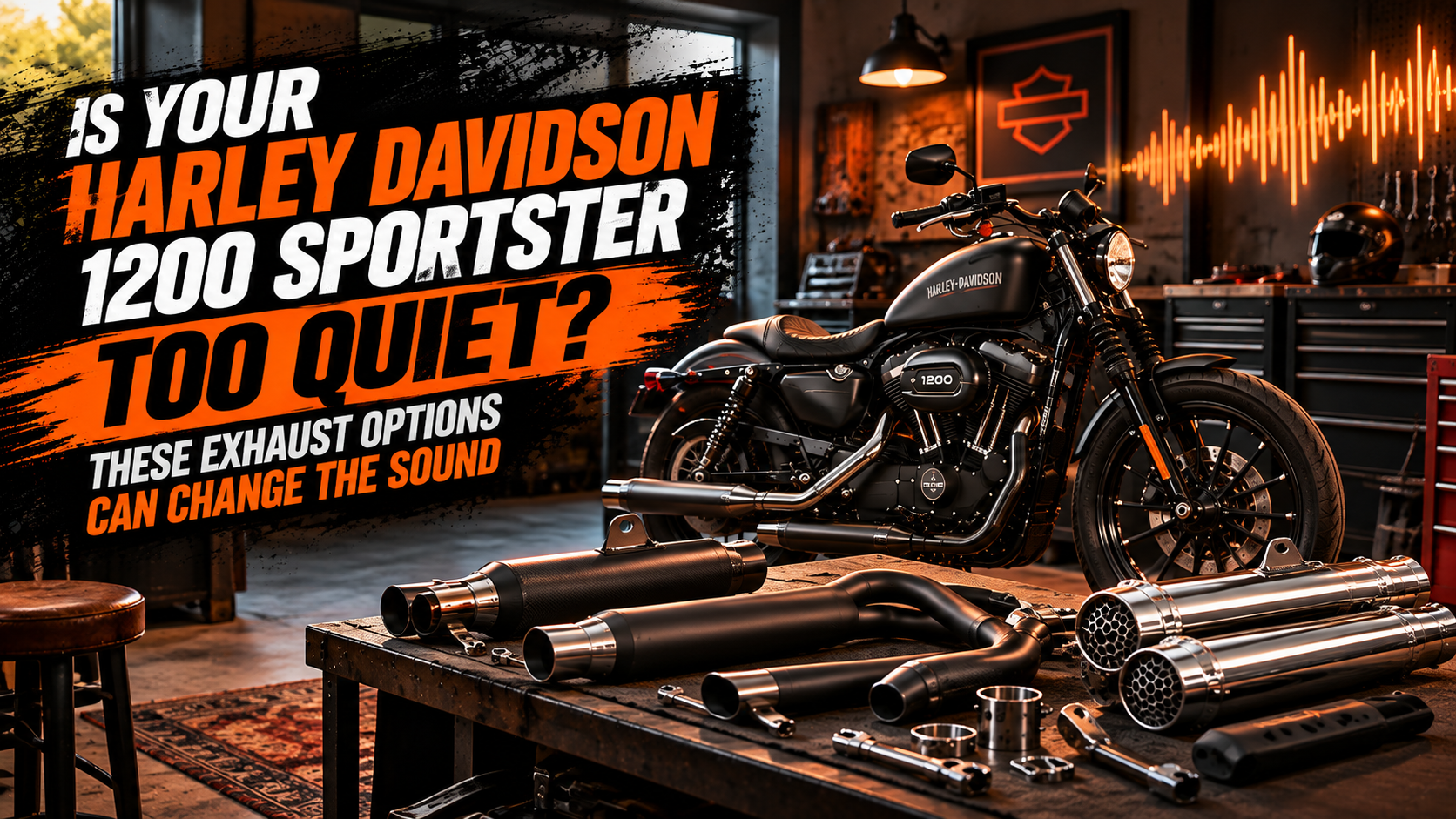
You thumb the starter on your Sportster 1200 and wait for the sound. What comes back is polite. Almost apologetic.
That muted note is not your engine holding back. It is the factory exhaust doing exactly what it was built to do, which is keep things quiet.
A Harley Davidson 1200 Sportster exhaust from the factory is tuned for emissions and noise rules, not for character. The good news is that the sound is one of the easiest things on the whole bike to change.
Here is what actually decides how your Sportster ends up sounding:
Whether you change the mufflers only or the whole system
Whether you run a two into one or keep twin pipes
Whether the baffles stay in or come out
Whether you fund a fuel tune to go with the pipes
How Do You Make a Harley Davidson 1200 Sportster Exhaust Sound Louder?
The fastest route to a bigger sound is a slip-on muffler swap. It frees the note the factory baffles hold back and takes an hour or two to fit. For a deeper, fuller tone and real weight loss, a full system is the stronger choice, though it asks for a fuel tune to run right. Twin pipes keep the classic Sportster look, while a two into one concentrates the pulse into one low voice. Decide the tone you want first, then match the hardware to it.
Why Your Factory Sportster Sounds So Restrained
The pipes fitted at the factory are built around three things: noise limits, emissions compliance and production cost. None of them is about how the bike sounds to you.
You notice it most next to other bikes. A friend's twin rumbles at the lights while yours quietly clears its throat. That contrast is the designed in restriction talking.
Strip back what the factory fits and the restriction is easy to see:
A catalytic section in the pipe that muffles the pulse
Heavy internal baffling built to meet noise limits
Thick walled steel that adds weight up high
A fuel map set lean and safe for emissions, not for feel
The Harley-Davidson Sportster has worn several engine platforms over the years, so the exact note also depends on which one you ride. Either way, improving a Sportster 1200 exhaust means removing a restriction that was put there on purpose.
Worth knowing before you shop: you are not buying volume off a shelf. You are freeing a note the engine already makes, then paying separately for the tune that lets it breathe.
Exhaust Options That Change Your Sportster's Sound
Every option below moves the sound in a different direction. Read each one as a trade, because gaining one thing usually means giving up another.
There is no single best answer here. The right choice is the one that fits your ears, your bike and your budget, which is why it helps to know what each change really does before you spend.
1. Slip-On Mufflers: The Easiest Change
A slip-on replaces the mufflers only and clamps onto the factory head pipes. It is the accessible route, reversible in an afternoon, and the cheapest way to hear what you actually like.
Expect a louder, clearer version of the stock tone rather than a brand new voice. Because the head pipes usually stay in place, the change is real but measured.
A slip-on typically changes four things:
Volume, giving a louder and clearer take on the stock note
Tone, slightly, since the head pipes stay in place
Weight, by a modest amount over heavy stock mufflers
Looks, with shorter or reshaped silencers
If you are still deciding how far to go, our guide on what to consider before upgrading your Sportster 1200 exhaust walks through the same call in more detail.
One more point in its favour. Because a slip-on is reversible, it protects resale value, since you can refit the stock mufflers before you sell and keep the aftermarket set as a separate selling point.
2. Full Systems: Two Into One or Twin Pipes
A full system replaces everything from the head pipes back. It opens the whole gas path, saves the most weight, and gives the biggest change in sound.
A two into one merges both cylinders into a single muffler. The result is a low, concentrated bark with strong pulse separation, and it frees up space on one side of the bike.
Twin pipes keep the symmetrical Sportster silhouette and spread the sound across both sides. Neither layout is faster on its own, so choose by the look and the voice you want.
Watch the real cost here. A slip-on plus a fuel module often lands close to the price of a bare full system, so compare complete setups rather than headline prices.
Heat and clearance follow from the layout too. Twin pipes put warmth on both sides in slow traffic, while a single tucked unit concentrates it and frees space on the other side for luggage or a passenger.
Riders chasing the full list of gains can read our rundown of the performance benefits of a Sportster exhaust upgrade before they commit to a system.
3. Baffles and Db Killers: Your Volume Dial
Inside most aftermarket mufflers sits a removable baffle, sometimes called a db killer. Leave it in for a street friendly note. Take it out for more volume.
Be careful here. A straight-through pipe with the baffle gone is loud, but it often turns thin and tiring on a long ride. A well-baffled muffler usually sounds richer than an empty one.
Live with the choice before you commit to it. A note that thrills for ten minutes can wear thin over a two hour ride, and long rides are what decide whether you keep a system or sell it on.
4. Material and Build Quality
Most Harley Sportster exhaust systems are made from stainless steel, which resists corrosion and handles repeated heat cycling well. Kinetic builds its Sportster range in stainless and manufactures it in the USA.
Titanium is lighter again and colours attractively with heat, though it costs more and dents more easily. Mild steel with a coating is the cheapest route, but once that coating chips, rust is not far behind.
Ask for the material as a fact, not a description. Grade, wall thickness and weld quality tell you how a system will look and sound in three years far better than the brand name does.
Before you spend, it is worth reading our list of things to know before buying a Harley Davidson Sportster exhaust, which covers the fitment traps that catch first time buyers.
5. Tune It, or Live With Less
Changing exhaust flow changes the air and fuel mix the engine was set up around. On fuel injected Sportsters that means a fuel module or a remap. On older carburetted bikes it means rejetting.
Skip the tune and the engine runs lean. You lose throttle response, run hotter, and often feel worse in the mid range than before. A Sportster exhaust system fitted without tuning is the most common reason riders end up disappointed.
There is a simple check after fitting and tuning. Hold a steady throttle in a middle gear from low revs. If the bike surges or hunts, the tune is unfinished, whatever the pipes are doing.
6. Match the Sound to How You Ride
The right Harley Davidson 1200 Sportster exhaust is the one that matches how you actually use the bike. A short blast on a Sunday rewards a different setup than a daily commute.
If you ride two up or cover long distances, a controlled, deeper note wears better over hours in the saddle. If your Sportster is a weekend toy, you can happily live with something louder and sharper.
Daily miles and highway: keep a baffle in for a note you can tolerate for hours
Two up riding: avoid heat and drone on the side nearest your passenger
Short weekend rides: a louder, sharper tone is easier to enjoy
Shows and slow cruising: idle character and looks matter more than top end
Be honest about your typical ride, not your dream ride. Most Sportster owners cover more ordinary miles than they expect, and a tone chosen for a short thrill can become a chore on the commute home.
Is a Louder Harley Sportster Exhaust Legal?
Mostly yes, with a few checks worth five minutes of your time. Replacement exhausts sold in the United States fall under 40 CFR Part 205, Subpart E, which covers labelling, noise and tampering.
Three things are worth confirming before you buy:
Look for a permanent compliance label naming the maker and the standard it meets
Check whether the system is sold as competition only, which is not for road use
Confirm your state noise limits, since many systems are marked not legal in California
None of this makes an aftermarket exhaust illegal. It makes uninformed buying expensive, since a competition only system bought by mistake cannot legally go back on the road.
If you buy used, ask the seller for a photograph of the compliance label before money changes hands. A missing or illegible label is a warning sign about both the system and the seller.
What a New Exhaust Will Not Fix
A new exhaust shapes the character of your engine. It does not replace it. A Sportster stays a Sportster, only louder and clearer.
It will not add power on its own. Fitted without a tune, it can even feel flatter in the mid range than the pipes it replaced.
It will not cover for skipped maintenance. Worn plugs, a tired air filter or a loose primary will still be there, only now you can hear them more clearly.
And it will not stay as delivered forever. Baffles and packing wear with heat and miles, so a system that measured fine when new can drift louder over several seasons.
Final Thoughts on Your Harley Davidson 1200 Sportster Exhaust
Two things change the moment the pipes go on: the sound and the weight. The deeper character and the real gains arrive once the fuelling is corrected.
That single fact explains almost every unhappy review of a good product. The pipes were fine. The tune was missing.
The riders happiest with their Sportster exhaust are rarely the ones who spent the most. They are the ones who chose deliberately on each trade, then paid for the tune that made the choice pay off.
Decide your tone, pick the layout that fits your bike and your riding, then budget for the tune. Do that and a Harley Davidson 1200 Sportster exhaust becomes the best value change on the whole motorcycle.
Ready to Change Your Sportster's Sound? Explore Kinetic Motorcycles
Kinetic Motorcycles builds Sportster exhaust systems chosen for honest sound, verified fitment and real build quality, with guidance available before you order rather than after. The team can confirm the right system for your exact year and model.
Visit www.kineticmotorcycles.com to explore your options or ask for a fitment check on your Sportster.
Frequently Asked Questions
-
Start with a slip-on that has a removable baffle. It gives a louder, clearer note while keeping control of the volume. Leave the baffle in for daily miles, and only take it out when you want more.
-
They answer different questions. A slip-on is cheap, reversible and quick, so it suits testing the tone you want. A full system saves more weight and changes the sound most, but it needs a fuel tune to run right.
-
In most cases yes. A freer flowing exhaust leans out the air and fuel mix, which costs throttle response and runs hotter. A slip-on may tolerate it, but a full system almost always needs a tune.
-
Not on its own. The exhaust frees a restriction, but the engine only uses it once the fuelling is tuned. Fitted without a tune, it can feel flatter in the mid range than stock, not stronger.
-
Low, concentrated and purposeful. Both cylinders feed one muffler, which gives strong pulse separation and a deep bark at low revs. You trade the balanced twin pipe spread for a single, heavier voice and more weight saved.
-
Some are, some are competition only. Road systems must carry a compliance label naming the maker and standard met. Federal rules ban removing baffles to beat the noise limit, and state limits vary, with many not legal in California.
-
For most riders, stainless steel is the best all round choice. It resists corrosion and heat cycling without a coating to rely on. Titanium is lighter but costs more. Ask for the grade as a number, not premium steel.
-
Not automatically. The Sportster ran through Ironhead, Evolution and Revolution Max platforms, and mounting points and routing changed across them. Match the system to your exact year and model, confirm fitment in writing, and keep the original boxed.