
Throttle Body Gasket Explained: Symptoms, Leaks & Fixes
It usually shows up when everything should be working right.
The engine is fully warm. The idle should settle around a steady engine RPM, but instead it wanders. At the stoplight, the bike feels unsettled. You roll on the throttle and get a slight hesitation, just enough to feel wrong.
In many cases, this isn’t tuning or an air–fuel mixture issue. It’s a throttle body gasket quietly failing at its job.
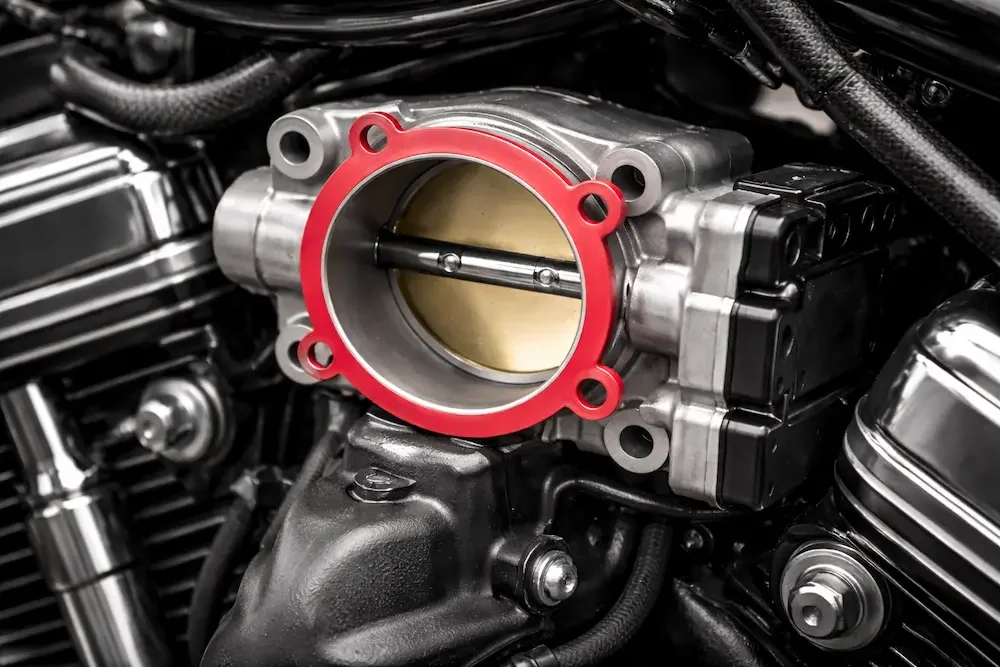
The throttle body gasket seals the joint between the throttle body and the intake manifold, ensuring the correct amount of air flows into the engine. When that seal breaks down, unmetered air leaks into the air intake system, causing intake leaks that disrupt idle speed, throttle position signals, and fueling.
Why throttle body gasket failures matter for riders
Fuel-injected motorcycles depend on accurate airflow data. Air should pass cleanly through the air filter, into the intake, and be measured before entering the engine. When air sneaks in past a leaking gasket, it throws off the system’s calculations.
The ECU tries to compensate by adjusting fueling and idle speed, but it has limits. That’s why gasket-related problems often show up as rough idle EFI behavior rather than a complete failure.
Riders usually notice:
Rough idling once the engine is heat-soaked
Hesitation when opening the throttle from low RPM
Unstable idle speed at stoplights
Lean conditions caused by excess air in the engine
At Kinetic Motorcycles, we most often see throttle body gasket issues after intake work, especially when the throttle body is removed to service the intake or air cleaner and the old gasket is reused.
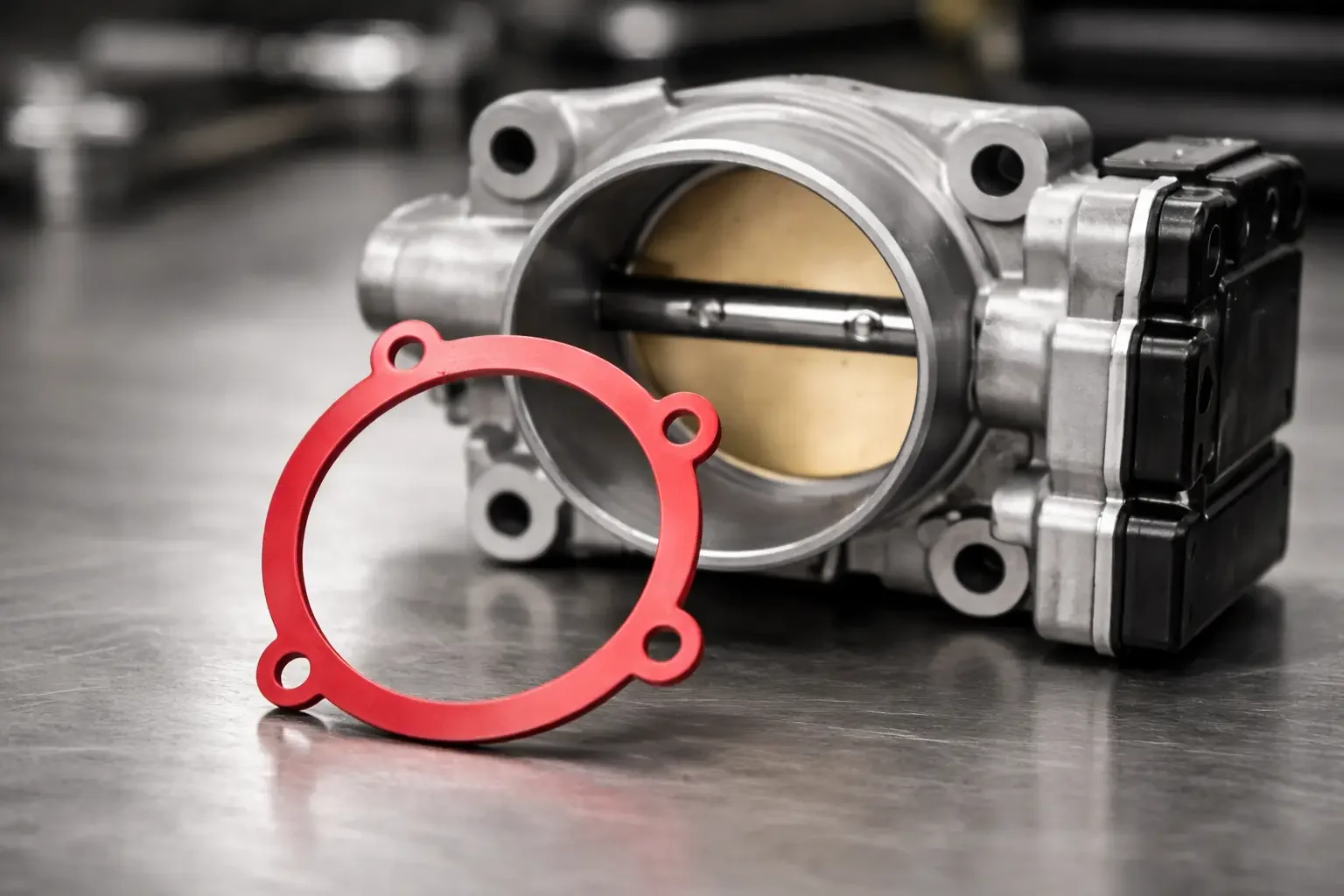
Throttle body leak symptoms to watch for
Throttle body leak symptoms tend to appear gradually, especially when a small air leak develops rather than a full gasket failure.
Common signs include:
Rough or uneven idle speed
Hesitation is tied to throttle position changes
A faint hissing sound near the intake manifold
Lean-condition fault codes on EFI bikes
RPM changes when using carb cleaner around the throttle body during a spray test
If spraying carb cleaner near the gasket causes the engine RPM to change, unmetered air is entering the intake system, clear evidence of an intake leak.
Throttle body gasket vs. other intake leaks
Not every intake problem points directly to the gasket. Understanding the difference helps narrow diagnostics faster.
| Leak Source | Typical Symptoms | Notes |
|---|---|---|
| Throttle body gasket | Rough idle, hesitation | Common after service |
| Intake manifold boots | Severe lean condition | Often cracked with age |
| Vacuum hoses | Erratic idle speed | Brittle or disconnected |
| Injector seals | Hard starting | Fuel smell may appear |
| Air intake system leaks | Inconsistent fueling | Filter or housing issues |
While vacuum hoses and intake boots fail with age, throttle body gaskets most often fail due to disturbance during service.

Fitment & compatibility: choosing the right throttle body gasket
Throttle body gaskets are not universal. Fitment depends on how air moves from the air filter through the intake and into the engine.
Before ordering, confirm:
Engine model and year
Throttle body diameter
Intake manifold design
Gasket material type
Common gasket materials
Fiber or paper gaskets – OEM-style, single-use
Rubber-coated metal gaskets – Better sealing across heat cycles
MLS (multi-layer steel) – Used in high-performance applications
If airflow has been increased through intake or air filter upgrades, sealing accuracy becomes even more critical.
How to fix intake leaks caused by a throttle body gasket
Tools and parts needed
Correct throttle body gasket
Socket set and torque wrench
Intake-safe cleaner or carb cleaner
Clean shop towels
Step-by-step fix
Disconnect the battery to protect EFI systems.
Remove the air intake components for access.
Unbolt the throttle body evenly.
Inspect the gasket for flattening or cracks.
Clean the throttle body and intake manifold surfaces thoroughly.
Install the new gasket dry, unless specified otherwise.
Torque fasteners evenly to factory specs.
Start the engine and verify idle speed stability.
A properly sealed throttle body restores correct airflow, stabilizes engine RPM, and eliminates rough idling caused by intake leaks.
Legal & performance notes
Intake leaks can cause emissions failures where inspections apply.
Lean air–fuel mixtures increase combustion temperatures.
Improper sealing can lead to long-term engine wear.
From a performance standpoint, eliminating intake leaks improves:
Idle consistency
Throttle response accuracy
Overall engine reliability
FAQs: Throttle body gasket & intake leaks
1. Can a throttle body gasket cause a vacuum leak on a motorcycle?
Yes. A failing throttle body gasket is one of the most common causes of a vacuum leak on fuel-injected motorcycles, especially after intake or throttle body service. Once compressed and heat-cycled, the gasket may no longer seal unmetered air out of the intake system.
2. Does a dirty air filter cause similar symptoms?
A dirty air filter can reduce airflow and affect performance, but it won’t cause unmetered air. Unlike a gasket leak, a restricted filter doesn’t create a vacuum leak or unstable idle speed—it limits air before it’s measured.
3. Can vacuum hoses mimic throttle body leak symptoms?
Yes. Cracked or disconnected vacuum hoses can cause rough idling, fluctuating idle speed, and hesitation that closely resemble throttle body gasket failures. Hoses should always be inspected before replacing intake components.
4. Should the gasket be replaced during intake work?
Always. Any time the throttle body is removed, the gasket should be replaced. Reusing it is a common cause of post-service intake leaks and rough idle complaints.
5. Can I keep riding with an intake leak?
You can ride short distances, but it’s not recommended. An intake leak allows unmetered air into the engine, which creates a lean air–fuel mixture. Over time, this raises engine temperatures, causes rough idling, and can accelerate internal wear. The longer it’s ignored, the more likely it is to affect reliability and performance.
Final takeaway
A throttle body gasket is easy to overlook, but when it fails, the effects ripple through the entire air intake system. Rough idle, hesitation, and unstable engine RPM are often the first clues.
If your bike shows signs of intake leaks, especially after intake or throttle body service, start with the gasket. It’s a small part, but it plays a critical role in how air flows into the engine and how confidently the bike rides.