
Beyond the Finish: Why In-House Manufacturing Guarantees a Better Fit and Finish
It is quite common that a product that boldly displays the label "Made in the USA" has a few more layers to its story beyond what is visible. Besides being a symbol of patriotism, it can signify a company’s longer commitment to accuracy, control, and quality.
Local production is a significant factor that enables this. When all stages of production are done in the same facility — where design, engineering, and assembly coexist — enterprises can guarantee an excellent fit, finish, and feel. Here is why:
The Core Advantages of Keeping Manufacturing Under One Roof
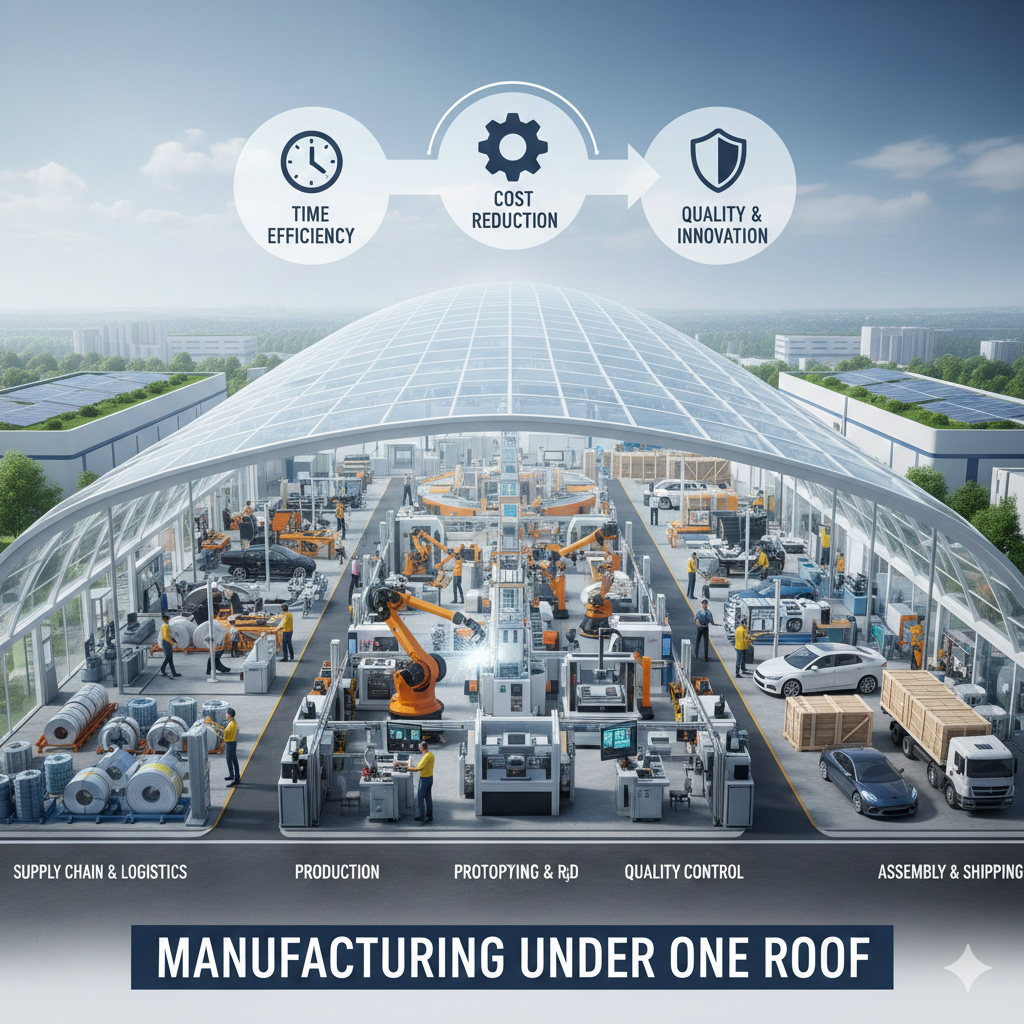
Keeping manufacturing under one roof ensures complete control over quality, flexibility, and precision, delivering superior products with unmatched craftsmanship.
1. Control Breeds Quality
One of the major benefits of in-house manufacturing is complete control. If the manufacturing is done in your own plant, you are the one who supervises each step - material sourcing, machining, testing, finishing. Not only are you allowed to define your quality standards, but you also implement them every day.
In-house production enables stricter quality control, as the team produces only your product. There is no third-party factory that can split its attention between you and several other clients. This focuses on the task at hand, meaning defects are identified early and adjustments are made continuously, resulting in the production of high-quality products with a refined finish.
2. Flexibility and Responsiveness
Producing products in-house not only raises the quality level — it also brings you closer the concept of agility. For instance, if a designer notices an issue, you don't have to wait for weeks to send an email to a factory that is outside your company. Instead, the R&D team can simply go to the production floor, present a prototype, modify it, and witness the changes being made in the next batch.
When everything is managed inside your own plant, you have the possibility to quickly modify the blueprints and put the changes into practice without any delay. It basically stands for shorter turnaround times, fewer misunderstandings, and a better match between the designed product and the one that comes off the production line.
So, what do you get? A finish that is not only flawless but also exactly what the team had been thinking of.
3. Intellectual Property Protection
By contract manufacturing you are sharing a part of your IP (intellectual property) with the world. Secret recipes, exclusive product designs, and unique processes are all at risk of being leaked if manufacturing is done at a third-party facility.
But, doing the manufacturing in-house will still save your intellectual property from being leaked, since it” serves as a further safeguard for a company's intellectual property.”
There's no need to fear that a partner will imitate your design or, even worse, that they will sell it. This safety gives you the freedom to come up with new ideas as you please, being aware that your secret sauce doesn't get out."
4. Made-in-USA Precision: More Than a Label
“Made in the USA” is not simply a phrase — it carries a significant difference when a genuine manufacturing capability supports it. Local oversight is one of the strongest reasons why in-house manufacturing in the U.S. can deliver precision handcrafted work.
Nevertheless, it is worth mentioning that "Made in USA" is not always a simple or absolute statement. According to the Federal Trade Commission (FTC) regulatory guidelines, the label with an unqualified “Made in USA” indication must mean that the product is "all or virtually all" made in the U.S.
This considers not only the final assembly but also the proportion of the product’s cost attributable to domestic versus foreign parts.
Such companies that are beyond those requirements, frequently by doing advanced machining, finishing, and assembly locally, provide a true assurance: each delicate surface, each close tolerance, each flush joint — it has been done with the kind of love that is only possible if you control every stage.
5. Logistical Efficiency and Shorter Feedback Loops
Making products in-house not only raises the standard of the product but also lowers the company's expenses. There is no need to wait for parts to be sent to you from a different continent, go through customs, or be delayed because of shipping disruptions. That is a saving of both time and money.
One of the main reasons is that when everything is done in-house, the feedback loop is very short. Engineers, operators, and designers can communicate directly, implement immediate changes, and verify them instantly. It cuts out the lengthy lead times and makes it possible to adjust even the smallest details of the product.
6. Real Investment, Real Pride
Going with in-house production — particularly in the U.S. — is a heavy decision that affects the future for quite a while. Yes, there is the cost at the beginning: building factories, purchasing machinery, and employing skilled workers. But it is also an investment in artistry, the company's good name, and brand reliability.
Thus, this is paid off gradually. Items produced with in-house accuracy usually have a lower return rate, higher customer satisfaction, and more positive feedback. Besides, the "Made in USA" label becomes much more than just a marketing tool — it is a real thing that stands for: durability, precision, and eco-friendliness.
7. Why Some “Made in USA” Labels Can Be Misleading
It is a reasonable question to ask: does the label "Made in USA" always mean what buyers assume? The answer is not always.
Some companies place the phrase on their products, while most of the parts or even the production process come from a foreign country. The Federal Trade Commission sets very clear regulations: to make a "Made in USA" claim without any qualification, the product should have almost no foreign content, and the last significant change to the product should have occurred in the United States. However, the reality is that the authorities rely on complaints for enforcement and not all products undergo a thorough inspection.
This implies that consumers have to take precautions. Identify brands which afford it the liberty to tell you what they mean by "Made in USA" - are they locally sourcing and machining, or are they just doing the final assembly here? There could be products "assembled in the U.S. from foreign parts," which is a completely different statement.
However, the "Made in USA" label is a strong indicator when you are aware that a company is truly doing the manufacturing in-house in the U.S. It means that you are not getting just a product, but real, quality, American-made craftsmanship.
8. Fit and Finish That Reflects Care
The product finish is perhaps the most visible and direct way to demonstrate how considerate and skilful the manufacturing process was, which is the benefit of in-house, U.S.-based manufacturing.
The components fit together flawlessly.
The material is even, the shape is accurate, and the colour is uniform.
Paint, polish, or any other finishing is of the same quality throughout.
By themselves, each of these little things may mean something very different, but when combined, they give the impression of a solid, luxurious, high-quality product made with confidence.
Why is that? Because the builders have a personal interest in the outcome. They are not merely executing a plan developed far away and printed out for them; they are the ones who designed it. They care about the product's appearance, feel, and performance.
9. A Better Long-Term Relationship with Customers
It's not just a product that you make through in-house manufacturing, particularly in the U.S., but rather it's the trust that you create. When people are aware that a product is made and finalised in a tightly controlled, standardised factory, they feel very confident and comfortable.
Moreover, you have an opportunity to tackle it if the situation is not right. Since you are managing the operation, you can go back and find the exact place where the error occurred, rectify it, and get enlightened — without having to rely on a third party.
Conclusion
Manufacturing with your own hands is not just a matter of short distances. It is about lifting the whole process of production - increasing the quality, protecting the company’s innovation, and making sure that every product with a “Made in USA” label is really worthy of it.
When you are the one manufacturing your product right there, you don't just get a smooth result: you get something that seems made with love, by people who can support every joint, curve, and surface. This is actually the strength of local production, which is why it results in a completion that is far beyond what any marketing tag can express.
Ready to experience the true power of in-house craftsmanship? At Kinetic Motorcycles, we take pride in delivering custom, USA-made parts that guarantee a perfect fit and finish every time. Explore our premium selection of parts and accessories, designed for performance, durability, and style. Don't just build a motorcycle—build a masterpiece. Shop now and take your ride to the next level!